Russell: China, Japan and South Korea are the main buyers of thermal coal in Asia.
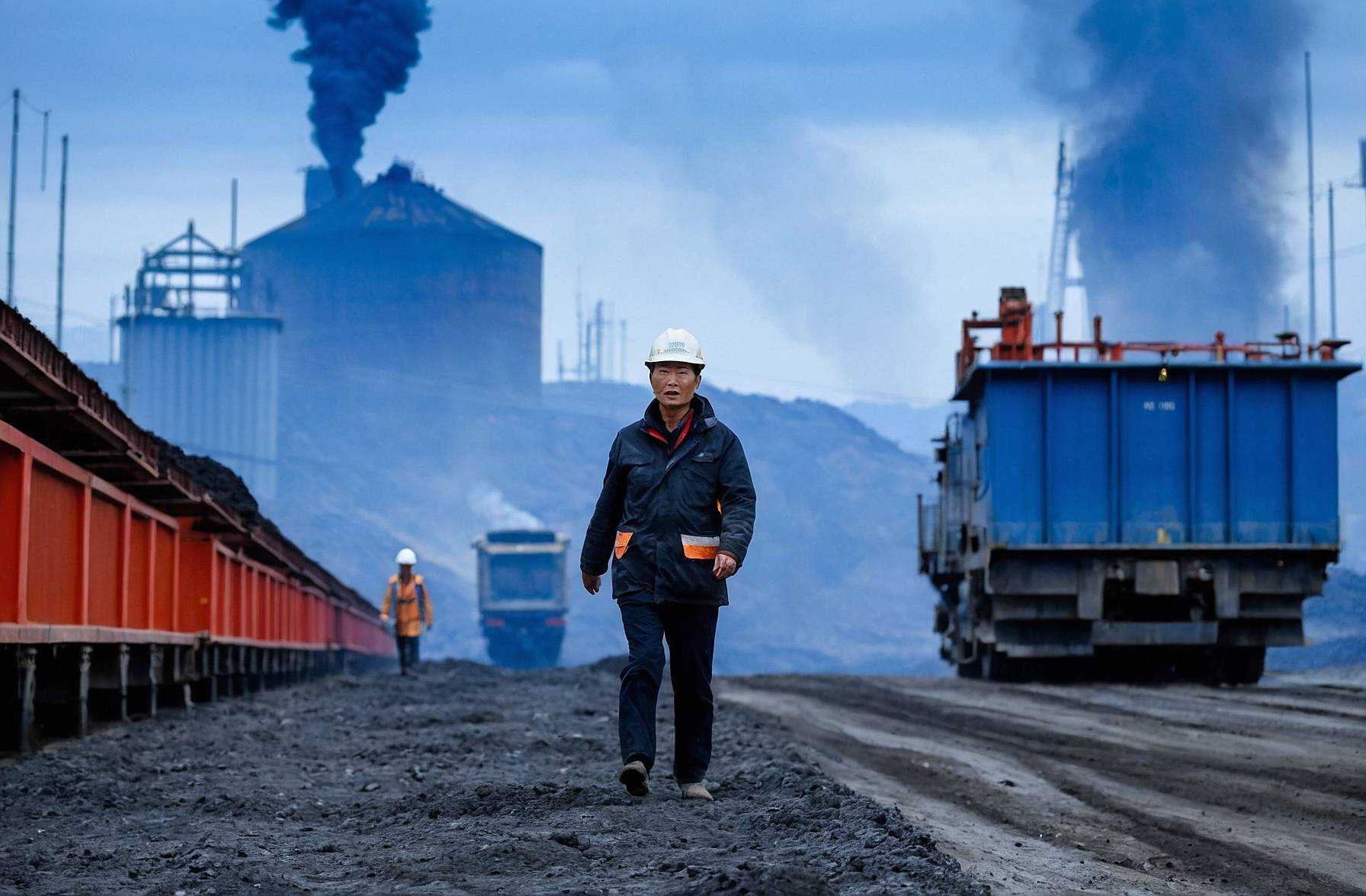
Asia's seaborne thermal coal imports are on the rise as China increases purchases to compensate for a soft domestic production and Japan and South Korea look for energy security in the aftermath of the?U.S. and Israeli war against Iran.
According to commodity analysts Kpler, imports in the top energy-consuming region are expected to increase to 77.37 millions metric tons by June. This is up from 68.39 in May.
The figure for June is up by a "robust" 22.3% from the 63.24 millions tons of the previous year.
The gains were driven by Japan and South Korea. These two developed economies are the most capable of switching between coal and LNG.
After the U.S., Israel and Iran attacked Iran on 28 February, Tehran closed the Strait of Hormuz effectively. This left Qatar with 20% of the global LNG supply.
Spot LNG delivery to North Asia
The price has fallen to $15.30 a mmBtu for the week ending June 19 but is still 47% higher than its pre-war levels.
The price of high grade Australian coal in Newcastle?Port also increased.
GlobalCOAL assessed the grade at $134.09 per ton, which was 15.7% higher than pre-war levels.
Since the Iran War began, thermal coal is cheaper than LNG. This dynamic can be seen in the flow rates.
Kpler predicts that Japan, as the third largest coal importer in the world, will record 7.82 million tons in thermal coal arrivals in June. This is a 33% increase from 5.89 million tons in the same period a year earlier.
South Korea's thermal coal imports are expected to reach 7.30 million tonnes in June, a 41% increase over the 5.16 millions tons imported in the same month of 2025.
CHINA RETURNS TO IMPORTS
Kpler predicts that China, which is the top coal buyer in the world, will also buy more. The 27.65 millions tons of seaborne thermal coal expected to arrive by June are a six-month record and a 48% increase from the 18.62 from June 2025.
China's increased imports are not related to the conflict with Iran, but rather reflect market dynamics on its own domestic markets, where a stronger demand for thermal power generation has collided against a softer coal supply.
According to official data, China's thermal energy generation, which is dominated by coal and a small percentage of natural gas in the mix, increased?2.1% during May. This brings the total gain for the five months to date to 3.4%.
In May, coal production dropped by 1.7% from the previous year to 397.22 millions tons. It was also down by 0.3% in the first five?months of this year to 1.98 billion tonnes.
Safety inspections were conducted in China after a deadly mine accident in which 82 people died. This led to a decrease in production and a rise in domestic prices.
Thermal coal in Qinhuangdao
This price makes both low-grade Indonesian coal and medium-grade Australian coal competitive with Chinese domestic coal supplies, encouraging utilities to increase their seaborne imports.
India, which is the second largest coal importer in the world, has not been purchasing more.
The seaborne arrivals of coal thermal are expected to be 12.32 million metric tons in June. This is the same as May's 12,27 million, but lower than the 14.14 millions recorded a year ago.
Even though the domestic coal production has been struggling to increase this year, it is likely that higher prices have discouraged Indian power generators.
India instead is relying on its coal reserves and boosting the production of renewable electricity, which grew by 29.3% from the same month in 2025, reaching a record 17,9% of total country generation.
You like this column? Open Interest (ROI) is your new essential source of global financial commentary. ROI provides data-driven, thought-provoking analysis on everything from soybeans to swap rates. The markets are changing faster than ever. ROI can help you keep up. Follow ROI on LinkedIn, X.
These are the views of a columnist who writes for.
(source: Reuters)


