Nepal's hydropower ambitions are tested by deadly floods
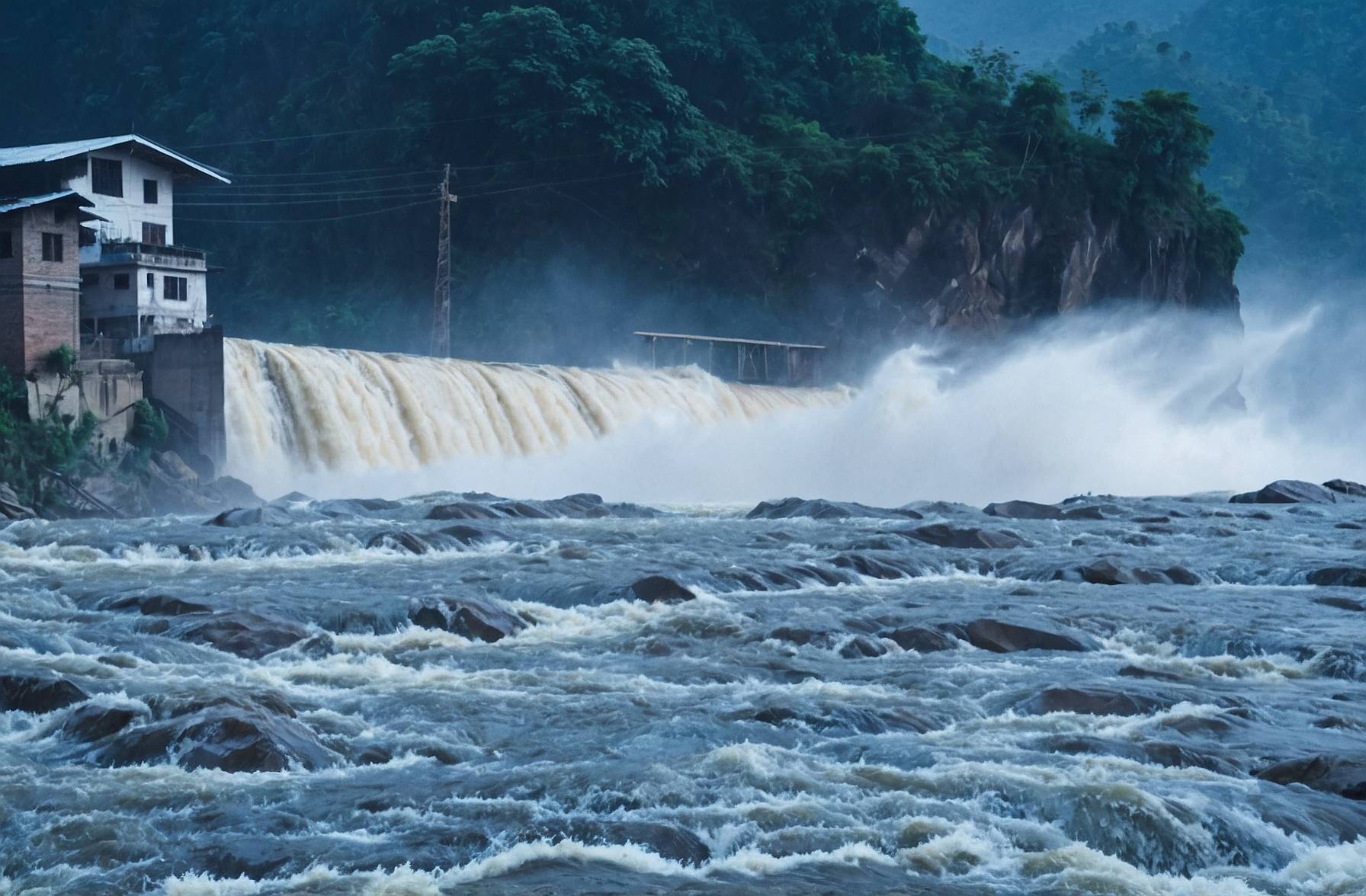
The floods in Nepal that destroyed a tenth its?electricity production capacity last week cast doubts on the ambitious plans for hydropower expansion. This forced the country to turn to India, a long-time power exporter, to keep the lights on.
Nepal is largely reliant on hydropower for its?electricity? and has seen a rapid increase in export revenues. Adani Group and NHPC have committed to finance a threefold increase in capacity to supply India's coal heavy grid over the next decade.
Mohan Kumar Shakya, spokesperson for the Nepal Energy Ministry, said that after flooding ravaged Bagmati Province, Nepal's major hydropower producing region, last weekend, the country stopped power exports. It will instead buy electricity from India in the months to come to cover the domestic shortages, he added.
A post-disaster needs assessment will be carried out. This report will tell you how long it will be before the power is restored. Shakya said that it will take some time to get this back.
Environmental experts warn that the risks of hydropower plants in flood-prone valleys and riverbeds are exacerbated due to their construction or planning. They also say global fossil fuel consumption is accelerating climate changes.
Anjal Prakash is the author of a report by the Intergovernmental Panel on Climate Change on climate change in cities.
The landlocked country, located between China and India, is heavily dependent on hydropower due to its lack of coal or gas-fired generation and the limited potential for wind and solar energy.
According to an analysis of data provided by the Nepal Electricity Authority (NEA) and the customs department, hydropower exports are also an important revenue source. They have risen an average of 75 percent over the last decade, and accounted for almost a 10th of Nepal's exports annually in the year that ended July.
What realistic options do they have at this scale if they don't develop rivers, even if those catchments are fragile? Victor Vanya is the CEO and cofounder of EMA Solutions, a firm that analyzes electricity data.
CLIMATE CHANGE IN THE HIMALAYAS
The floods that have hit Nepal are just the latest of a string of extreme weather events in the world. Heatwaves scorched parts in Western Europe, Australia, and South America while wildfires spread through Spain, France, and Chile.
The energy ministry reported that in?two districts in Bagmati Province,?nearly 800 people were missing from 11 power plants in operation or in construction after floods.
Vanya explained that investors typically use historical precedents to assess risks, but climate change is making it difficult for them to do so.
Farooq Azam is a senior cryosphere expert at the International Centre of Integrated Mountain Development. He said that the scale of the floods was beyond the reach of conventional alert systems.
Azam said that it was important to evaluate how the changing conditions of the?environment and mountains could affect infrastructure throughout its life.
Simon Stiell said, "humanity is burning colossal quantities of coal, oil, and gas, making tragedies such as this... more likely."
Prakash stated that "every villager who saw the valley disappear had to pay for decisions taken thousands of kilometers away about emissions."
(source: Reuters)


