Nepal rescuers reach remote regions, and electricity is restored almost a week following devastating floods
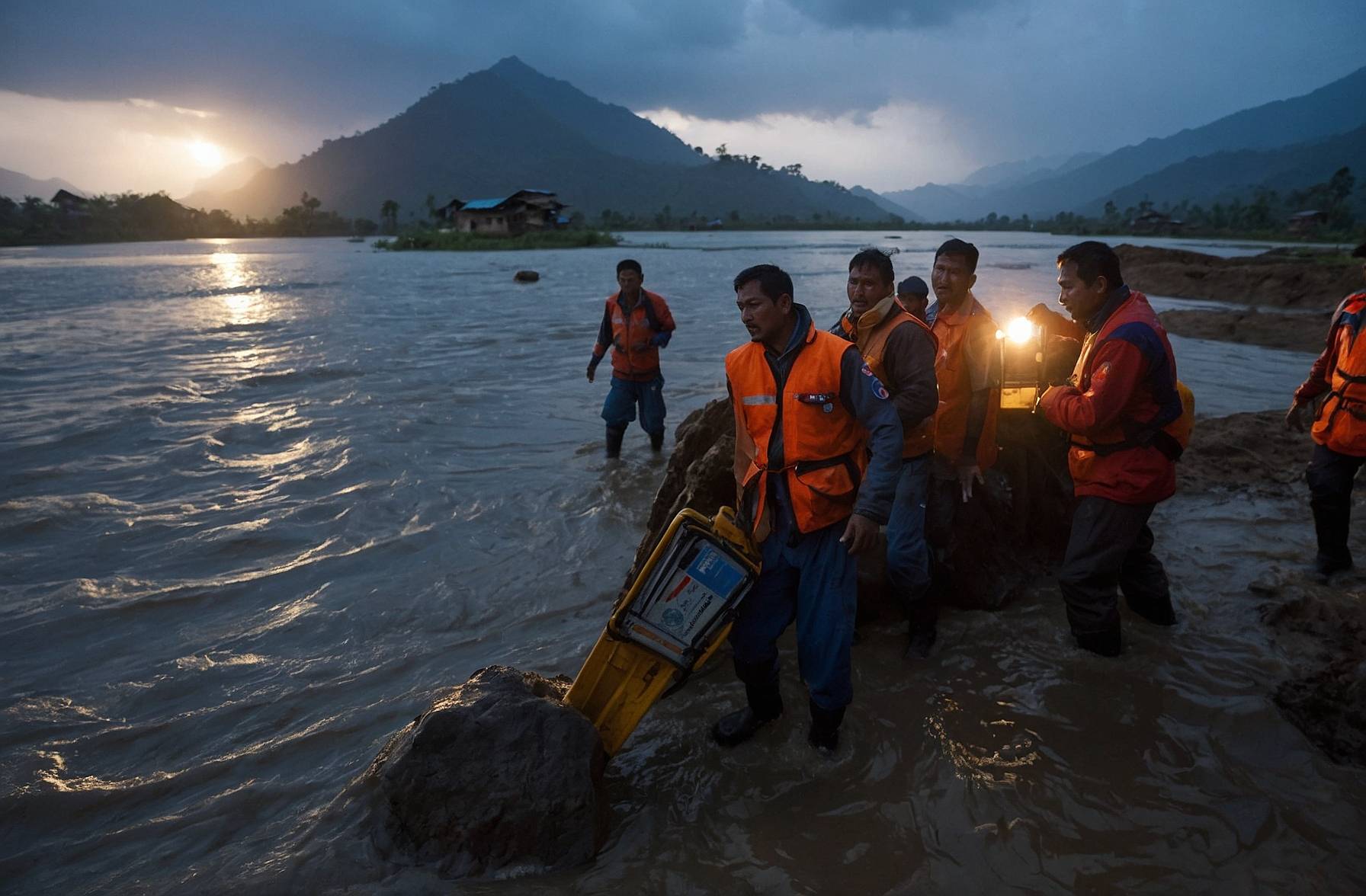
Rescuers in Nepal built temporary bridges and dug into the ruins of hydropower projects to rescue nearly 300 trapped workers. This was almost a week after devastating floods devastated the towns and valleys across the country.
Around 600 people are still trapped in several hydropower stations which have become the focal point of rescue efforts. Prime Minister Balendra Shah stated that over 11,000 people had been rescued in the region, and power and communications lines have been restored in certain areas.
In a post on social media late at night, Shah stated that there were 939 deaths as a result of the destruction.
He said that "thousands of citizens" had lost their homes, families and loved ones, as well as property.
The government is aware of the pain they are experiencing. It is important to help them get through their suffering and return to a normal life.
Shah stated that rescue teams were able to restore road networks in Nuwakot - one of the most affected districts - allowing for easier operations to be carried out and the distribution of aid materials.
The collapse of a glacier triggered a torrential downpour of ice and rock, which then swept across the border region between Nepal and China. This posed a huge challenge to Nepal's newly-elected government, which has only been in office for six months.
Bipin Regmi, a police official in Nuwakot District, said that a search team had recovered 24 bodies in a house located in Betrabati Village.
Regmi said, "We're reaching new areas to recover bodies."
Shah stated that more than 42 million dollars in aid had been poured into the nation after the disaster. The government expects the contributions to continue.
India and China, the two countries that border Nepal, helped with rescue efforts. They also built bailey-bridges to reach remote areas.
RESCUE EFFORT CENTRALIZED ON HYDROPOWER STATIONS
Shah stated that 279 workers have been rescued so far from hydropower plants where authorities estimate close to 1,000 trapped people.
Rescue teams shared pictures and videos of earth-moving machines digging and shovelling rocks and mud under lights at night while workers looked on. Soldiers searched for space in a large pit that they created with torchlight to enter a?tunnel.
Since the turn of this century, Nepal has seen a boom in hydropower projects as it sought to use its Himalayan resources to combat chronic power shortages at home and to sell electricity to India.
Hydropower projects are needed in Nepal’s mountains to transport water up steep slopes. This allows developers to take advantage of the sharp drop in elevation between Himalayan river and powerhouses, which can be used to generate electricity.
CHINA BLAMES GLOBAL WEATHERING
Shah said that the tragic?event?signalled the increasing risks that the Himalayan region faces.
"The region should therefore remain vigilant." In his blog, Shah stated that the 'time is now for us to bring the climate disasters before the international community.
China's State Broadcasting said that the floods of last week were "caused by glacier instabilities under long-term effects from global warming", according to a report released on Monday.
(source: Reuters)


