China and India make strategic investments in clean energy, which is not popular in the West
In the wind-swept grasslands in Inner Mongolia (northern China), towering white turbines are lining hilltops as sentinels, guarding a hydrogen industry Beijing wants to take away from coal. The project is part of the largest of its kind, a $2 billion venture that uses renewable energy to power banks of electrolysers which produce the?molecules required for fertilizer production, marine fuel, and low-emissions steelmaking. India's commitments to "green hydrogen" are more aggressive and concrete than China's.
Report: Greece's electricity grid operator wants to extend the life of lignite plant
A Greek newspaper reported that Greece's IPTO, the power grid operator, wants to keep a lignite plant, which is scheduled to close later this year, open for another year. The company says it will be needed for supplies, given 'the turmoil caused by?the Iran - war,' a Greek paper said. Greece, as part of the European Union's efforts to reduce greenhouse gas emissions by 55% by 2030 has committed to stopping burning lignite by 2028. This is because lignite is the most carbon intensive form of coal.
TotalEnergies reports damage to SATORP refinery after incidents
TotalEnergies, a French oil company, said on Friday that one of the SATORP refinery's processing train in Saudi Arabia was damaged by incidents that occurred during the night from Tuesday to Wednesday. The incident prompted TotalEnergies to shut the units down as a precaution. Saudi Arabia's oil capacity has been reduced by 600,000 barrels a day due to?attacks against energy facilities. Saudi Press Agency reported Thursday, citing a source at the energy ministry that the throughput along the East-West Pipeline has dropped by 700,000 barrels per day.
Palm oil prices rise over 1% as bargain-buying and crude oil price rebound
Malaysian palm futures closed?more that 1% higher Thursday, recovering?some losses from the previous session, backed by bargain-buying amid a rebound in crude oil prices. The gains were however, capped because of pressure from Dalian's weaker rival oils, and confusion about Indonesia's biodiesel blend timeline. After a drop of more than 3% in the previous session, the benchmark palm oil contract on the Bursa Derivatives exchange for June delivery rose 56 ringgit or 1.22% to 4,642 Ringgit ($1,166.33).
Prices of EUROPE GAS remain stable as LNG trapped in the Hormuz Strait remains behind.

Dutch and British gas contracts saw small gains Thursday morning as the optimism over a 'quick resumption of LNG shipments through the Strait of Hormuz following the U.S.Iran ceasefire faded. Intercontinental Exchange data showed that the benchmark Dutch front-month contract for the TTF hub had increased by 1.03 euros to 46.33 euros per Megawatt Hour (MWh) at 0833 GMT. The British contract in April rose 2.92 pence to 117.17 pence a?therm. Prices dropped'sharply' on Wednesday, on the hope that a ceasefire between the U.S.…
Palm oil prices rise on the back of bargain-buying, but Indonesia's biodiesel mandate is uncertain.

Malaysian palm futures climbed on Thursday as bargain-buying?emerged following a recovery in crude oil prices. The gains were however limited by the pressure of Dalian's weaker rival oils, and confusion about Indonesia's biodiesel blend timeline. After a drop of more than 3% in the previous session, the benchmark palm oil contract on Bursa Derivatives Malaysia Exchange rose 29 ringgit or 0.63% to 4,615 Ringgit ($1,159.55). Anilkumar bagani, head of commodity research at Sunvin Group in Mumbai…
Brazil weighs fast-tracking biodiesel tests as diesel prices spike
The head of the Brazilian soy crushers' association stated on Wednesday that the government was looking for ways to speed up testing of higher biodiesel blended diesels, with the goal of reaching a conclusion this year. This is due to a rise in fuel prices caused by the Iran -war. The measure could increase soybean demand in Brazil, the world's biggest producer of oilseed. Most of it is exported to China as animal feed. Brazil's biofuels sector has taken advantage of the disruptions in oil and gas supply in the Middle East to push for higher mandated blended?of soy based diesel and gasoline.
Palm oil drops to a two-week low after ceasefire, dragging crude oil down
Malaysian palm futures fell more than 3% on Tuesday, hitting their lowest level in two weeks, due to a sharp fall in crude oil prices following a U.S.-Iran ceasefire agreement. The benchmark?palm-oil contract for June delivery at the Bursa Derivatives Exchange was 179 ringgit or 3.76% lower than the previous day, closing at 4,586 Ringgit ($1,154.00) per metric ton. This is the lowest price since March 26. Sandeep Singh of The Farm?Trade in Kuala Lumpur, a consulting and trading firm…
Lee, South Korea's Lee, says the country must balance risks as disruptions to oil supply from Hormuz threatens the country.
South Korea must accept some risk when importing crude oil from Middle East due to the blockade of the Strait of Hormuz. This was the message of President Lee Jae Myung on Monday. In a cabinet discussion, Lee stated that there are few alternative routes and if the shipments were to be stopped altogether due to increased risk, this could have a severe impact on South Korea’s crude supply. It would also pose a significant risk to the general public. We?need a balance, and accept a degree of risk," Lee added.
Energy ministry reports that Morocco has enough diesel to last for 51 days.
The 'energy' ministry announced on Thursday that Morocco, which is heavily dependent on imports, has enough diesel to last for 51 days or 55 days respectively, and that gas and coal supplies are?secured until the end of the month. The war in the Middle East has caused an unprecedented disruption in energy supplies, leading to record gains in crude oil prices. This is especially painful for Morocco because it has no refining capacity at home. After the U.S.-Israeli attacks on Iran, which occurred at the end?of February, tensions in the region increased.
Energy officials in Thailand say that Thailand wants more LNG from Malaysia
Thai energy officials said on Wednesday that Thailand actively seeks additional 'LNG' supplies from Malaysia due to disruptions caused by the Middle East conflict. Watcharin Boonyarit said that Thailand will need to diversify its LNG supply, which is estimated to be between 5% and 10%. He was speaking on the sidelines at the Offshore Technology Conference held in Kuala Lumpur. He said that "roughly two to three LNG ships arrive from the area each?month" and added that these?shipments will need to be replaced in the future if the crisis continues, for example through spot market purchases.
Thailand Seeks LNG Supplies from Malaysia Due to Middle East Conflict
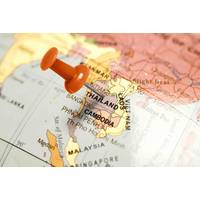
Thailand is actively seeking additional LNG supplies from Malaysia following disruptions caused by the ongoing Middle East conflict, Thai energy government officials said on Wednesday.Thailand would need to diversify some of its LNG supply away from the Middle East, estimated at roughly 5% to 10%, said Watcharin Boonyarit, the Energy Ministry's deputy director general of its Energy Policy and Planning Office, on the sidelines of the Offshore Technology Conference in Kuala Lumpur."Roughly two to three LNG vessels arrive from the region each month," he said, adding that those shipments would nee
The Russian government has announced that the ban on gasoline imports will be implemented from April 1.
The Russian government reported that Alexander Novak, the Deputy Prime Minister of Russia, had instructed his energy ministry on Friday to draft a resolution banning gasoline exports as of April 1, 2019. The state-run TASS reported earlier that the ban will remain in effect until July 31. Novak stated that the turmoil on 'the global oil market and its products, which is caused by a crisis in the Middle East has led to significant price changes. He also said that the demand for Russian energy resources on foreign markets is high.
Colombia: Venezuela's PDVSA intends to terminate pipeline contract with Ecopetrol
Edwin Palma, Colombia's Energy?Minister, said Venezuela's PDVSA state oil?company intends to terminate a contract with Colombia Ecopetrol?over?the Antonio Ricaurte?pipeline. He claimed that there was not enough?investment in its repair. Palma, in a Saturday post on X, said that the government planned to meet the U.S. Government on Monday to discuss the lifting of sanctions against Venezuela and normalizing commercial relationships. The announcement comes a day following a high level meeting between two countries held in Caracas.
Palm oil gains over 4% on the back of higher crude oil prices
Malaysian palm futures gained on Friday and posted a second week of gains. This was due to a rise in crude oil prices as a result of the Middle East conflict, which boosted demand for feedstocks used to make biodiesel. The benchmark May palm oil contract on the Bursa Derivatives Exchange rose 23 ringgit or 0.51% to 4,564 Ringgit ($1,159.26), and was up 4.69% over the week. The biggest daily increase in three years was a surge of more than 9% on Monday. Dalian's most active soyoil contract grew by 0.53% while its palm oil contract grew by 0.62%. Chicago Board of Trade Soyoil lost 0.55%.
Palm oil is set to record a weekly gain as it rises against strong Dalian competitors
The price of Malaysian palm oils rose on Friday and was set to gain for a?second week in a row, as the prices of rival edible oils were also rising at 'Dalian. By Friday's midday, the benchmark palm oil contract for?May delivery at the Bursa Derivatives Exchange had gained 56 ringgit or 1.23% to 4,597 Ringgit ($1,169.42). The weekly gain is 5.27%. Dalian's palm oil contract increased 1.34% on Friday while the most active soyoil contract gained 1.27 %. Soyoil traded on the Chicago Board of Trade fell 0.04%.
South Korea is considering energy vouchers and boosting coal, nuclear power
The government of South Korea said that it is looking at providing energy vouchers for vulnerable households to help'subsidise' them if global fuel prices rise in the wake the Middle East Crisis, which will increase electricity costs. In the event of high oil prices and disruptions in LNG supplies, Asia's 4th largest?economy? is also planning to increase nuclear and coal-fired energy generation. Kim Jung-kwan, Minister of Industry, said that the government would take "all necessary measures" to reduce the burden on people.
As the Middle East conflict increases costs, Bangladesh secures LNG spot cargoes
Energy officials reported that Bangladesh purchased three LNG cargoes at higher prices on the spot markets, as it scrambled to maintain supplies in the face of disruptions caused by the escalating conflict between Iran and Israel. Energy officials in South Asia said that Petrobangla, the state-run energy company, has increasingly turned to the volatile market to fill the gap after certain suppliers had to stop shipments. An anonymous official from the energy ministry said that if the disruption continues, we will have to rely more on expensive spot?LNG.
Bangladesh closes early its universities to save energy amid energy crisis

Bangladesh will close its universities on Monday as part of an emergency measure to conserve fuel and electricity amid a worsening energy crisis related to the conflict in the Middle East. The authorities said that the decision would apply to all private and public universities in the country. They also stated that the move will reduce electricity consumption as well as traffic congestion which results in fuel waste. Officials stated that university campuses "consume large quantities of electricity for residence halls…
carried Ukrainian and Russian oil before attack
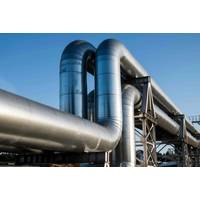
The Druzhba pipeline exported some Ukrainian oil, as well as much higher volumes of Russian crude, before it was damaged a month ago by a Russian strike that has led to a halt in supply, three industry sources familiar with the matter said.Oil shipments to Hungary and Slovakia through the pipeline primarily operated by Russia have been suspended since January 27 following what Kyiv says was a Russian attack on pumping installations in western Ukraine, prompting a dispute within…