Battery boom sparked by China's energy reforms and global data centres
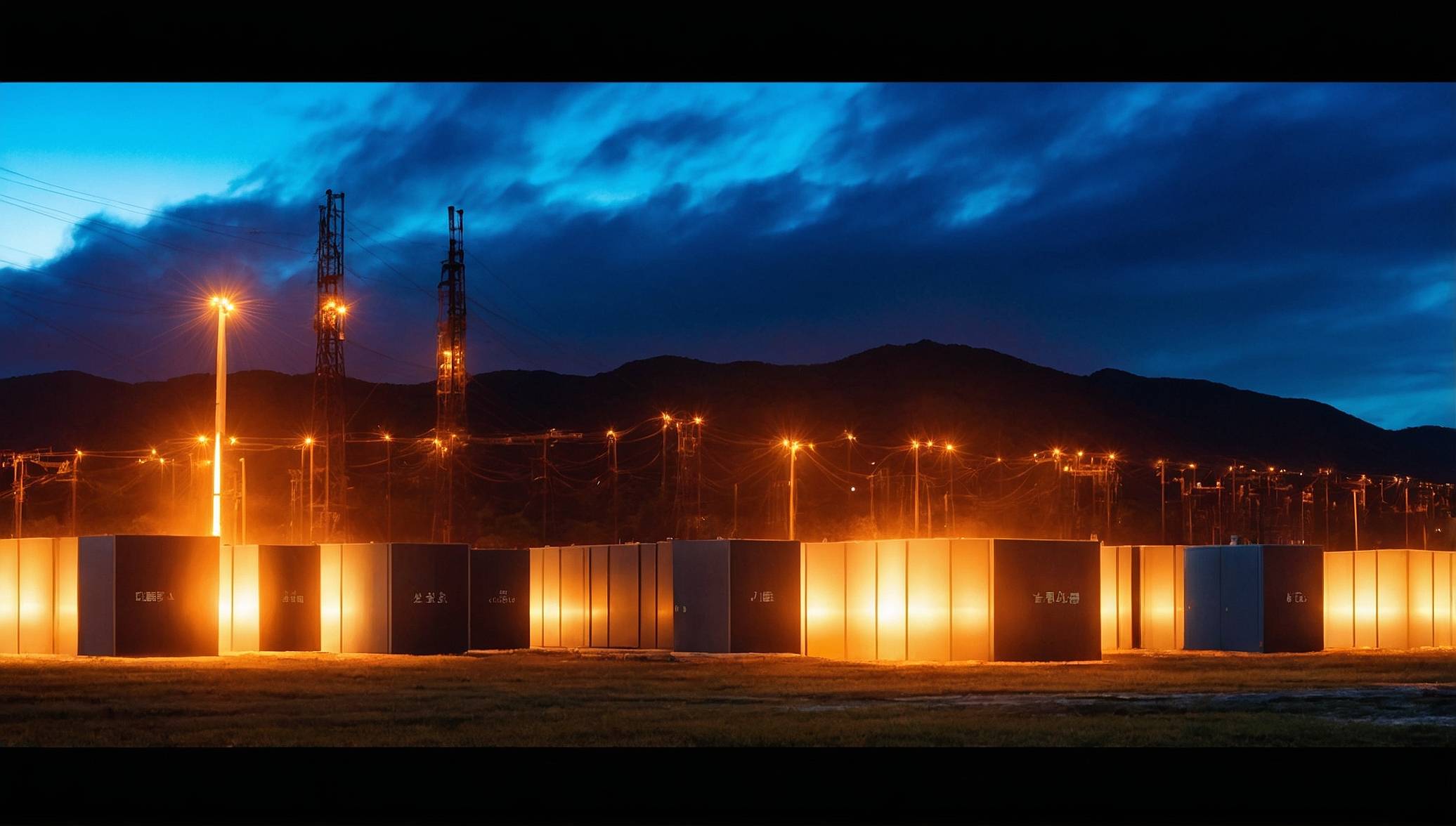
The Chinese energy storage manufacturers are booming as a result of the revamping of China's electric market.
According to one estimate, Chinese firms will see a 75% increase in global shipments this year of lithium-ion batteries for energy storage.
They have exported more than $65 billion worth of storage and electric-vehicle batteries this year, cementing their dominance in a sector vital ?to ?backing up wind and solar and keeping power coursing through artificial-intelligence data centres.
Sales are driven by the growth of data centres, renewables in China and Chinese reforms that have boosted energy storage demand. Analysts say that international demand is increasing in parallel with data centre growth, the need to support Europe's aged grid, and China's growing renewable energy business in Middle East.
Going Global
These leading energy storage cells makers have all orders. Cosimo Ries, an analyst at Trivium China's policy research firm, said that many of these companies are working in double shifts to meet the demand. This boom is "one of the biggest surprises I've seen in China's energy sector this year."
UBS raised its forecasts for 2026 global battery-energy storage by 25%.
International Energy Agency predicts that global investment in battery storage will increase by 16% this year, to $66 billion. Chinese companies are expected to capture a large portion of this investment, as they dominate the production of tiny cells that make up energy storage systems.
According to Infolink's ranking of January-September, all six top global cell suppliers - Contemporary Amperex Technology Ltd. (CATL), HiTHIUM Energy, BYD CALB, REPT BATTERO, and CALB - are Chinese. Only AESC from Japan is not a Chinese company.
EVE's sales of energy storage products increased 35.51% over the past three quarters compared to the same period in 2013. REPT BATTERO set a new record for its third-quarter battery shipments. CATL and BYD, two of the top EV manufacturers, did not separate energy storage shipments in the third quarter. Storage has traditionally made up a smaller percentage of their revenue than automotive batteries and electric vehicles, but the percentage is increasing.
UBS analyst Yishu Yin told a press briefing that "pair solar with storage is the only way to meet U.S. AI-data-centre energy needs." "U.S. AI power centre demand is robust but power is the main bottleneck. U.S. Baseload Power - Gas, Nuclear, Thermal - will not grow much in the coming five years."
Yan said that Chinese manufacturers are at risk from U.S. restrictions regarding projects receiving tax credits for investment that include designated "foreign entity of concern" which includes China.
POWER MARKET SHAKE-UP
According to Ember, China's battery sales, which include EVs and storage batteries, reached a record of $66.761 billion during the first ten months of this year. Since?2022, batteries have become China's largest clean-technology export, surpassing solar photovoltaics.
The consultancy Infolink predicts that global energy storage cells could reach 800 gigawatt hours next year. This is a 33%-43% increase over this year's predictions.
China's exports for energy storage and non-automotive battery products increased 51.4% from the same period in last year. This is faster than the 40.6% increase in EV batteries, according to China Electric Vehicle Industry Technology Innovation Strategic Alliance.
China has already built the largest battery energy storage fleet in the world - about 40% of the total global amount -?as a result of local government mandates that developers add storage to solar and wind projects. China's battery capacity this year surpassed that of conventional pumped-hydro, a technology with fewer geographical limitations which uses water behind dams for electricity generation when needed.
But much of that battery storage capacity sat unused because it wasn't profitable to operate.
This model has changed with the reforms of June, which required that newly constructed projects sell their electricity through auctions based on market prices instead of a set rate. It is now more profitable to operate a storage facility that makes money by charging when prices are low, and discharging them when prices rise.
The China Electricity Council reports that energy storage plants have run longer since the reforms were passed in the third quarter. They averaged 3.08 hours a day on average, an increase of 0.78 hours compared to a year ago and 0.23 hours compared to the previous three-month period.
The new government plan of $35 billion to double battery storage in China by 2027, as well as the new provincial subsidies are all contributing to this. Jefferies reports that 10 Chinese provinces, in addition to subsidies, have implemented capacity tariffs since late 2024. These are special payments made to providers who keep their capacity available.
In a note, Jefferies analyst Johnson Wan stated that this is the "most decisive policy change for energy storage since over a decade".
(source: Reuters)


