Trump has threatened to isolate Iran. Who are Iran's trading partners?
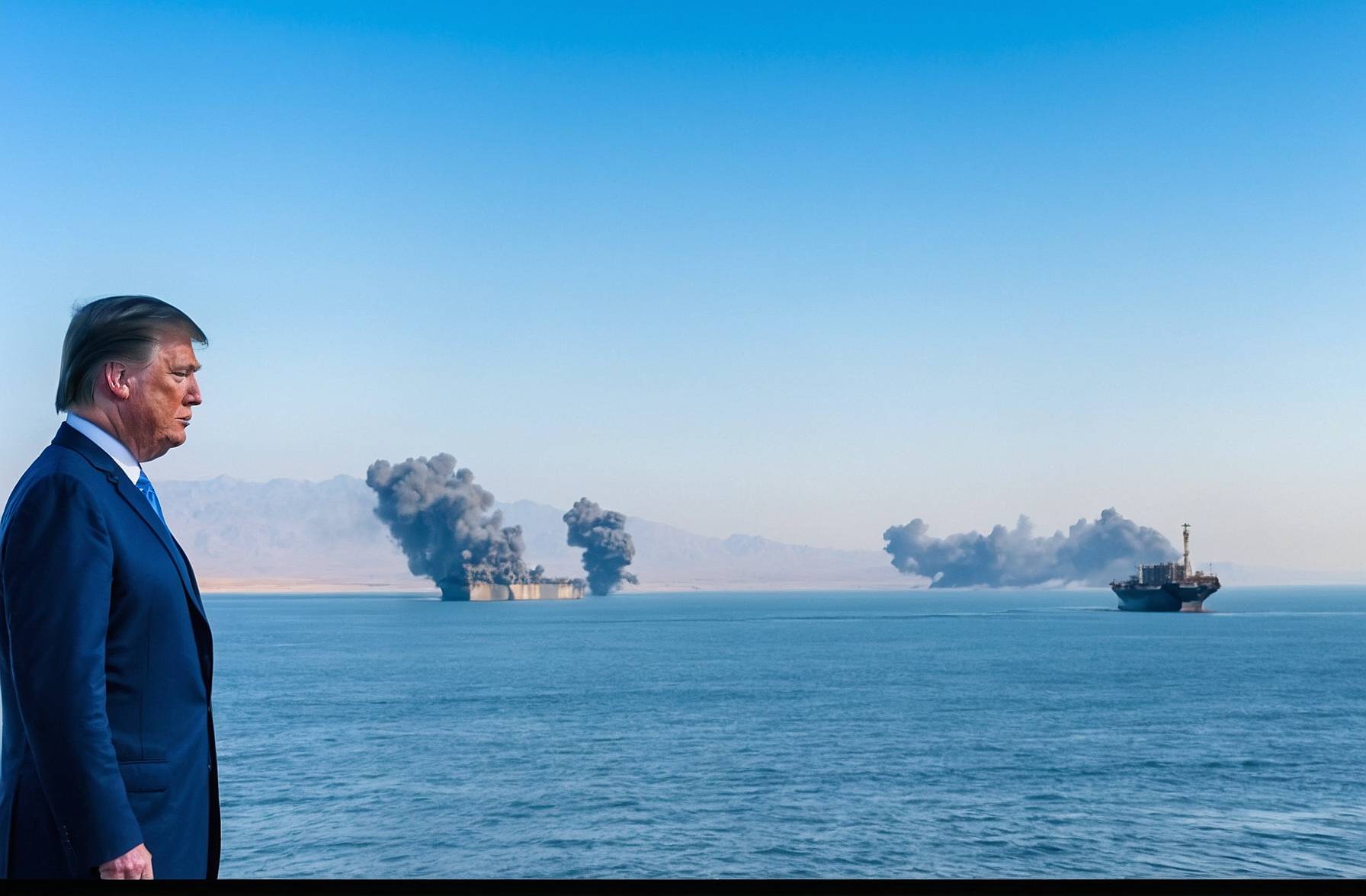
The threat of Donald Trump, the U.S. president, to impose unprecedented economic war and isolation against Iran could have consequences for countries who trade with it. Trump warned that any country supporting Iran would face economic consequences.
In recent years, Iran has traded with a number of major trading partners.
If Trump keeps his promise, China, which is the largest buyer of Iranian crude oil, may face increased pressure from the U.S.
China has built a system of refineries that mainly process Iranian oil, and have little exposure to the U.S.
Refinery sources and traders say that Iranian oil sold to China is branded as Malaysian and, more recently, Indonesian. It trades in a closed loop, in Chinese currency, and with a complex network of intermediaries. In 'April, the U.S. treasury imposed sanctions against a Chinese refinery that bought billions of dollars worth of Iranian crude oil. It also warned Chinese banks about secondary sanctions if their trade with Iranian oil was facilitated.
"Sanctions or pressure won't solve the problem." China urges all parties to take responsibility to resolve this issue by diplomatic and political means, said Lin Jian, spokesperson for the Chinese Foreign Ministry.
China has received over 80% of Iran’s oil, as independent Chinese refiners have taken advantage of the discounted oil sanctioned by the United States. Kpler estimates China will buy an average of 1,38 million barrels of Iranian oil per day in 2025.
UNITED ARAB EMIRATES
Dubai's banks, which have held large deposits linked to Iran, are now unable to access them due U.S. sanctions.
According to the latest World Trade Organization figures, the UAE was one of Iran's biggest?trade partners prior to the war. It provided 30% of its total imports, worth $21 billion, in 2024. The data also showed that it accounted for 13% Iran's exports during the same period. According to data from the UAE Economy Ministry, non-oil trade between the two nations totaled $6.6 billion by 2024. The vast majority of the trade was represented by reexports.
The UAE has suspended all economic and financial transactions with Iran, until further notice. They cited a military threat by Tehran, which escalated the tensions between the two countries.
Turkey
Turkey and Iran have significant economic ties. Turkey imports Iranian natural gas, and exports manufactured goods to Iran. Turkey has shown no sign of wanting to reduce commerce with Iran. Bilateral trade is around $5-6 billion per year, and Turkey exports to Iran about $3 billion. Turkey imports most of its natural gas and Iran provides 13%.
Iraqi official trade figures show that Iraqi trade with Iran topped $10 billion by 2025. This was largely due to Iranian exports to Iraqi markets of consumer goods, food and other products. Mohammed Karim, Iraqi trade ministry employee with knowledge of Iran trade, says that trade declined in 2026 as a result of the Iran War. This increased regional security and caused intermittent disruptions at key border crossings. The combination of these conditions and wider supply chain disruptions that affected the movement of goods reduced the volume of cross-border trade, although both countries are still important trading partners.
Energy is an important part of our relationship. Iraq pays Iran between $4 and $5 billion per year for natural gases, which are used to produce electricity, according to Iraqi officials. According to two Iraqi energy officials, any new U.S. sanction on Iraq would make it difficult for Baghdad to continue paying for Iranian energy and avoid exposure to U.S. restrictions.
Oman and Iran have enjoyed a long-standing relationship dating back to the Islamic Revolution of 1979. Muscat has often acted as a middleman between Iran and various countries, such as the U.S.
According to Oman's National Centre for Statistics & Information, the countries' relationship in trade has increased in recent years. The?trade in goods will total $1.5 billion by 2025, and $345 in the first quarter of this year.
PAKISTAN
Analysts said that any U.S. actions against countries providing trade or assistance to Iran would be a major setback for Pakistan. This is despite the fact that Pakistan and Iran have committed to increasing their bilateral trade up to $10 billion.
After past sanctions against Iran, formal trade had ceased between the two nations?until recent. Unofficial statistics show that informal trade between the two countries has amounted to $4 billion in exports and imported goods. Following the signing of the interim agreement in Islamabad, June, there was a rapid expansion of trade. Pakistan and Iran have traded oil, wheat and rice, as well as?livestock and medicines, through informal channels, for many years.
India's trade in Iran fell sharply after Washington continued to impose sanctions against Tehran.
In the fiscal year 2019-20 the two-way trade between India and Iran was reduced by nearly two-thirds, to $4.8 billion from $17 billion the previous year. India's Commerce Ministry reports that trade between India and Iran fell further over the years and reached $1.63 billion in fiscal year 2025/26.
The bulk of the trade is made up by Indian exports to Iran, which total $1.3 billion. New Delhi mainly ships tea, coffee, and spices.
Officials from New Delhi have maintained in the past that these exports are carried out for humanitarian reasons and should not be subject to any sanctions.
ARMENIA
According to official Armenian stats, Iran's trade with Armenia accounted for $768m, or 3.6%, of the total turnover of Armenia in 2025. Armenia's total trade with Iran in the first six months of 2026 reached $371.4 millions, an increase of 8.4%. Exports fell by 6% to $42.8 million while imports rose by 12% to $336.9 millions.
Iran accounts for?20% or more of Armenia's exports. Armenia and Iran are part of a "gas-for-electricity" exchange agreement. Armenia uses the?gas provided by Iran to produce electricity. This electricity is sent back to Iran, as well as used in Armenia.
AZERBAIJAN
Azerbaijan’s State Customs Committee reported that the trade turnover between Azerbaijan & Iran increased by 4.5% from January-June of 2026 to $312.6 Million, up from $299.1 Million. Azerbaijan imports of Iranian goods increased by 1.5%, from $292.7 to $297.6 million during the same period in 2025.
Azerbaijan exports to Iran increased 2.4 times to $15.6million from $6.4million in January-June of 2025.
Iran's share of Azerbaijani imports increased from 2.54% to 3.56% between January and June 2025. Reporting by Mei Mei Chu and Dmitry Zhdannikov; Compiled by Michael Georgy, Tom Perry, Timothy Heritage, Edited by Timothy Heritage.
(source: Reuters)


