US takes on Chinese dominance in the race for African minerals
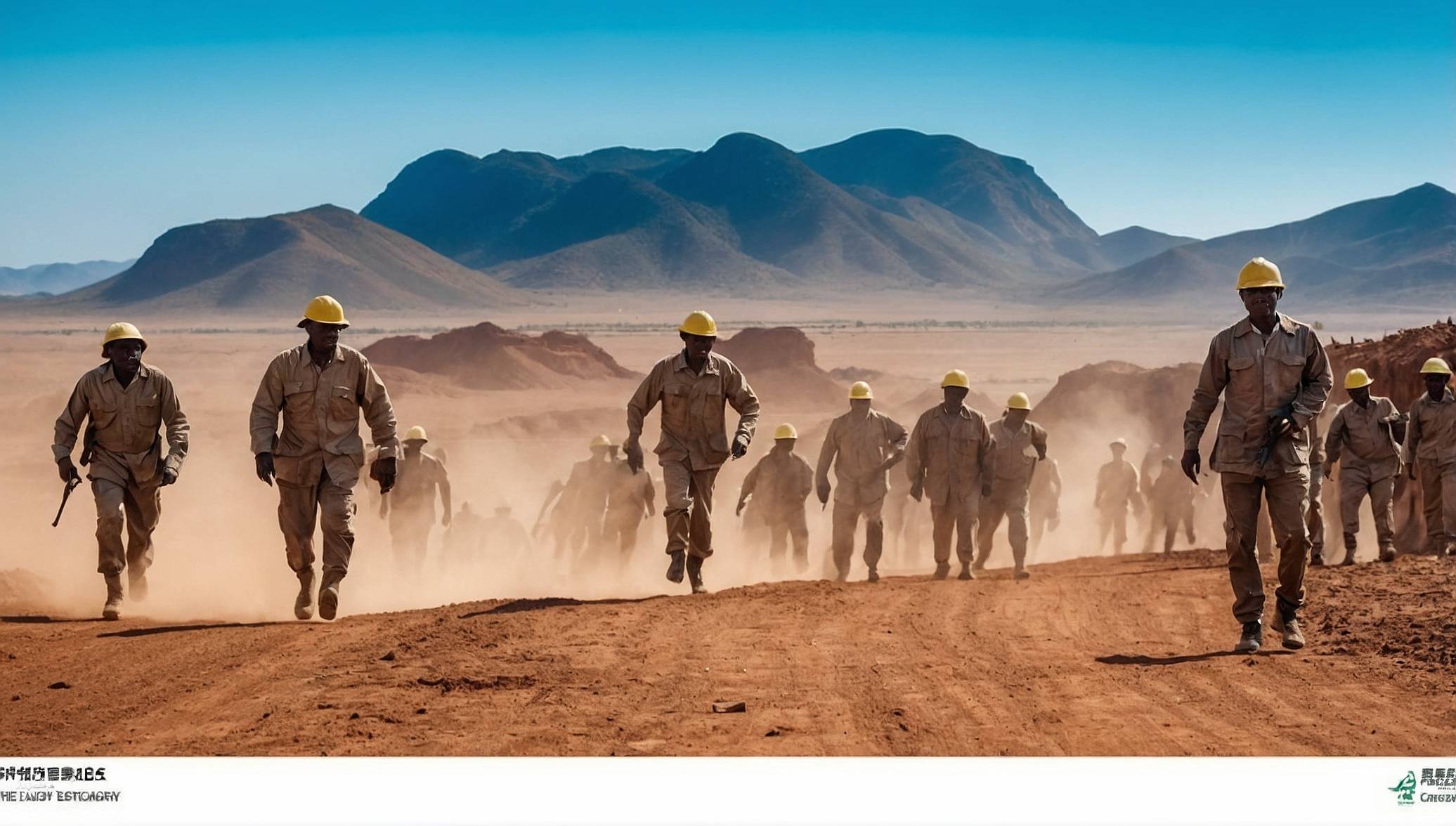
Diplomats, executives and analysts have said that the U.S. uses offtake agreements and state-backed financing to compete with China?in a short time frame? in order to secure supplies of African cobalt, copper and other essential minerals. Washington is focusing on Zambia, Guinea and the Democratic Republic of Congo. The Democratic Republic of the Congo is expected to produce 3.3 million tons of copper by 2024 and account for 70% of global cobalt supply. The U.S., instead of placing U.S. companies in high-risk areas, is leaning toward offtake and other trade structures, such as the one it has with Mercuria, and arrangements with Congolese State Miner Gecamines to push output into U.S. aligned value chains that are dominated by Chinese refining.
Offtake occurs when a company or country secures a portion of the output from a mine in exchange for financial support or other assistance.
Thomas Scurfield is a senior analyst at the nonprofit?NRGI. He spoke ahead of the South Africa event.
Scurfield said that the U.S. has put money behind its words, but it is yet to be seen if it can compete with China in terms of scale and speed. Washington and Beijing will be seeking new commitments this week at the Indaba Mining event in Cape Town, with the U.S. contacting officials from its minerals bloc. Gecamines, which is preparing 100,000 tons of copper from its Tenke Fungurume allocation for U.S. buyers in this year's shipment after gaining broader marketing rights through a renegotiation with China's CMOC 2023, will be at the center of the change.
'FINANCIAL POWER RATHER THEN INDUSTRIAL PRESENCE
The U.S. approach goes beyond copper. Xiao Wenhao said that China's supply chain for cobalt is also at risk as Congo's restrictions on exports collide with the expanding U.S. DRC cooperation. Pensana, a London-based company, has abandoned plans to build a rare Earth refinery in Britain for processing feedstock from their mine in Angola. Instead, the project will be built in the United States.
Vincent Rouget is an analyst with Control Risks. He said: "This is the U.S. using financial firepower instead of industrial presence." Washington can use offtake and trading channels to redirect Congolese Copper to American Buyers without having the take on political or operational risk of operating mines in DRC.
Chinese companies still own many of Congo’s largest copper and cobalt assets. These include Tenke Fungurume,?Kamoa Kakula and others. They have been sending the majority of their output to China since more than a ten-year period. Congo has become a major supplier of zinc and cobalt.
Gecamines has recently exported its first locally processed germanium, thanks to new offtake agreements.
CHINA VERSUS - THE WEST
The disparity in capital allocation remains stark.
KoBold Metals staked over 3,000 square kilometers of land in the copper and lithium belt. However, it will not move forward with projects that are involved in disputes. Its Congolese director Benjamin Katabuka stressed governance standards.
Chinese operators have, on the other hand, moved quickly in contested areas, enhancing their speed to market advantage. KoBold has said it will not make any progress at Manono, which is one of the largest lithium deposits in the world that are still undeveloped, until ownership issues have been resolved. Zijin, meanwhile, has advanced infrastructure on the northern bloc.
KoBold claims that production can begin within three years if the southern block is secured. Winning Consortium Simandou, backed by China, has pushed forward with the rail and port construction of the giant Simandou in Guinea despite ownership disagreements, forcing Rio Tinto into line. Maxwell Akalaare Adombila, Pratima Deai and Alexander Smith edited the report.
(source: Reuters)
