India's low battery storage bids are raising concerns about project viability
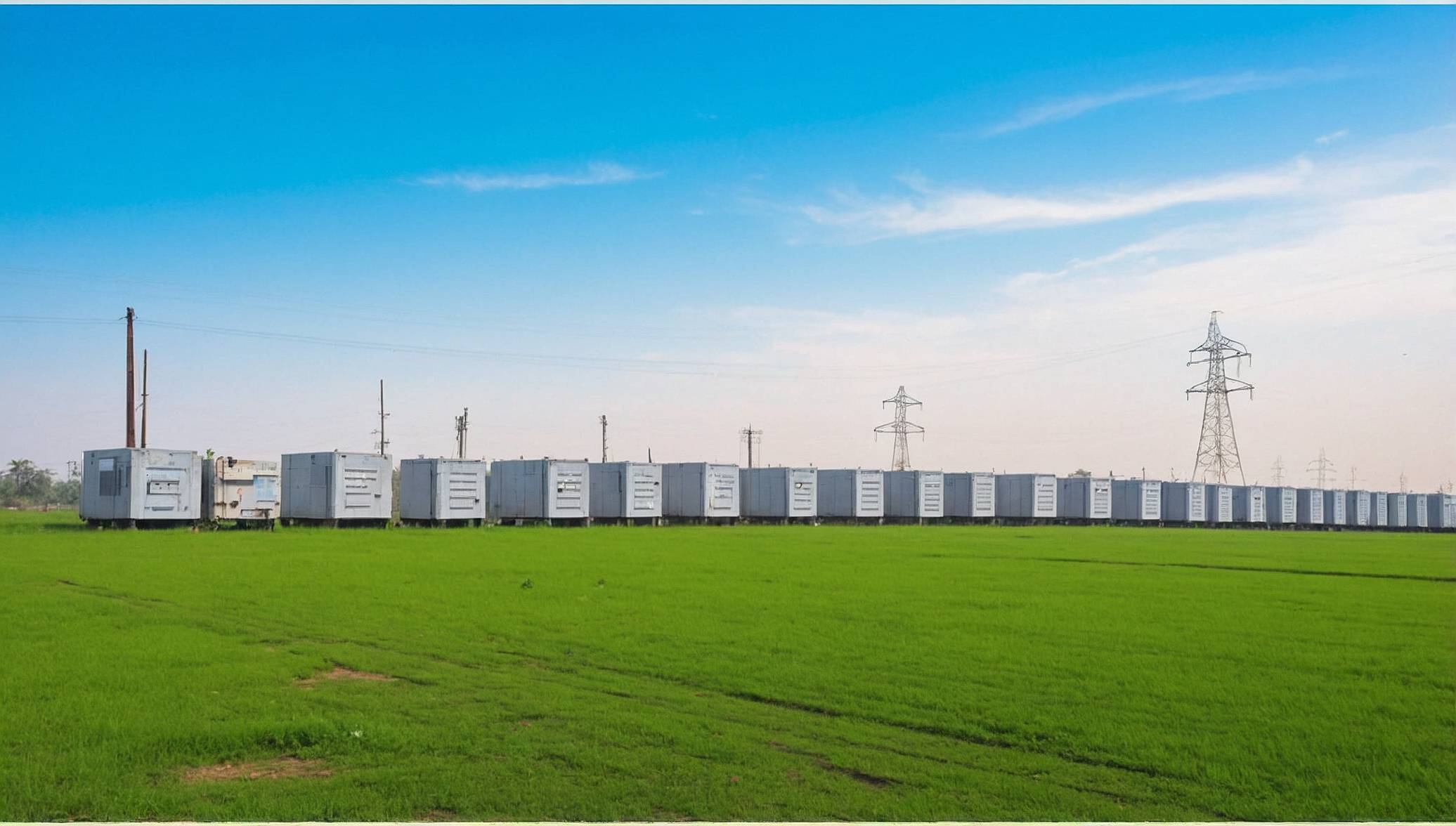
Industry experts and analysts fear that the record-low bids to build battery energy storage system in India could make some projects economically unviable, or even dangerous. This would hinder efforts towards renewable power.
Battery projects are critical to India's goal to double its renewable energy capacity by 2030 to 500 gigawatts, while the grid operator reduces excess power.
India Energy Storage Alliance (IESA), an industry group, says that India has contracted out 83 gigawatt hours (GWh) worth of battery storage since 2021. However, it needs to accelerate its pace in order to meet the 236 GWh storage requirement by 2032.
Of the 83 GWh that were tendered, 36 GWh has been awarded, 15.4 GWh is in the open-tender stage, 18 GWh is being built, and 8 GWh projects have?been canceled.
Experts claim that India will continue to use coal as its main source of power for the next decade despite its battery storage ambitions.
IESA reported that India only had 500 MWh battery storage systems operational by September.
'KILLING GAME'
Debmalya Sen, President of ISA, said: "This race to offer the lowest tariffs is killing?game."
He added that the absence of technical eligibility criteria in the tender process attracted inexperienced players from sectors like real estate and food processing.
The established players have turned their backs on such projects.
Industry data shows that recent bids for renewable energy in Rajasthan, the state with the most renewable power, have been less than 1.5 rupees per kilowatt hour (about 2 U.S.cents).
Such a level is "bonkers", said Vivek Bharadwaj, CEO of pathtogreenhomes.com, a consultancy for rooftop solar and storage projects, at just a third of a figure he considered reasonable.
Bharadwaj said that a healthy value for fixed costs is between 2 and 2.2 rupees a unit. With?charging cost, delivered power should come in at around 4.5 rupees a unit.
Batteries of low quality, cheaper prices
Power Secretary Pankaj Agarwal said, without providing details, that the government constantly reviews support policies for storage.
He said that some prices found in the tendering process, of around 3.80 rupees for?kwh are feasible.
Analysts and industry experts say that lower tariffs encourage the use of batteries of lower quality with shorter life spans.
Sen, IESA, said that at the current low tariffs projects could be relying on “super cheap cells” which raises safety and performance issues in regions with high temperatures.
After fires in China and Japan, South Korea, and the United States, experts have raised safety concerns about the lithium-ion batteries used in power and storage systems around the world.
Play the FINANCE Game
Bharadwaj works with at least two firms that won storage tenders, but don't plan to build the projects. Instead they earn a premium if they sell them.
He warned that banks could be left with non-performing assets if they continue to follow such practices.
IESA lobbying for the revision of tender guidelines, adoption of technical criteria and tightening performance benchmarks.
It also wants to implement a phased approach for domestic manufacturing incentives. For example, it would like to see a gradual increase of basic customs duties and targeted support provided to cell manufacturers. $1 = 89.9070 Indian Rupees
(source: Reuters)


