Gascade Converts Pipelines for Alternative Marine Fuels
Credit: Adobe Stock/ Yingyaipumi
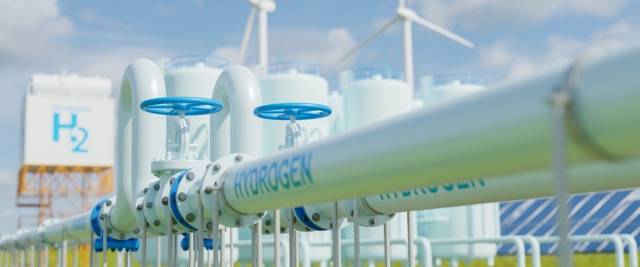
German gas grid operator Gascade on Thursday said it has converted a 400 km (249 miles) high-pressure pipeline to transport low-carbon hydrogen southwards from the Baltic Sea as part of a European core network to ship alternatives to fossil fuel.
New hydrogen pipelines, or conversions of existing ones, will serve to help meet European Union goals of net zero emissions by 2050, with the Ukraine war also sharpening the focus on energy security in the bloc and replacing Russian gas.
The pipeline can transport locally produced hydrogen from Mecklenburg-Vorpommern state via Brandenburg to Saxony-Anhalt initially, with a view to reaching the industry in southern Germany by 2029, and branching out to Poland, the Czech Republic and Austria later.
"Converting existing natural gas pipelines with a diameter of 1.4 meters to hydrogen is a technically pioneering achievement," said Gascade managing director Ulrich Benterbusch.
He was speaking at an inauguration ceremony at the Baltic Sea port of Lubmin, formerly a landing point for Russian subsea pipelines, which is now looking to become a hydrogen cluster.
The lining of the pipeline with cushion gas makes it technically ready for operations.
Gascade's move was laying the ground for more local industrial development and hopefully further investments at the site, said Ines Jesse, Mecklenburg state's deputy economy minister.
Green hydrogen can serve to store wind and solar power via conversion at electrolysis plants and can be transported and stored on a large scale. It is, however, expensive to develop, which can delay investment decisions in challenging economic conditions.
(Reuters)