Suncor Canada beats its quarterly profit expectations on the back of higher prices and improved margins
Suncor Energy beat Tuesday's adjusted profit forecasts as higher crude price realizations, and improved refining margins, offset lower upstream production. As the Middle East conflict supported crude markets, higher oil prices and fuel profits lifted earnings in Canada's oil patch. Suncor, based in Calgary, Alberta, said that oil sands operating earnings adjusted to C$2.592?billion, up from C$926?million a year earlier, while refining & marketing operating earnings adjusted to C$2.068 billion, up from C$404?million. Years of investment has helped Canadian oil and gas producers to increase production while keeping costs in check.
Saipem lowers its forecast for 2026 due to additional Gulf costs and denting share prices

Saipem's 2026 core earning forecast was cut on Tuesday. The Italian oil and gas contractor saw its shares fall by more than 7% as it said that disruption in the Gulf caused extra costs and logistical difficulties. Oil and gas producers have been forced to be more cautious due to the repeated?Iran War flare-ups. This has delayed tenders for repair work that Saipem, and other contractors had expected. Saipem expects to earn adjusted earnings before taxes, depreciation, and amortization (EBITDA), which was previously estimated at EUR1.9 billion, this year. This is up from an earlier EUR1.9 billion estimate.
Baker Hughes predicts lower oil and gas spending in 2026
Baker Hughes announced on Monday that it expects global oil and gas producers to reduce their annual spending modestly in this year. The growth in Latin?America and offshore Africa will be offset by lower spending in?European and Middle Eastern countries. This year, the Middle East conflict has dominated the energy market. The repeated escalation of tensions between Iran and the U.S. forced producers to adopt a more cautious approach instead of increasing drilling activities. On a call with analysts, CEO Lorenzo Simonelli stated that customers are focused on maximising?production?
Devon Energy expects to produce 1.38 million boepd in 2026 after Coterra's acquisition
After the completion of their merger with Coterra Energy, Devon Energy forecasted that its production in 2026 would average 1,38 million barrels per day. The $58 billion merger completed in May created one of the biggest independent oil and?gas?producers? in the U.S., with a presence in a half dozen regions, led by the Delaware part of the Permian basin in Texas and?New Mexico. The company forecasts capital expenditures of $4.9 billion for the full year, of which more than 60% will be allocated to the Permian basin, where it is focusing its activities around its core assets.
Oil and gas exploration is back. Energy giants are hunting to replenish reserves
Executives at the CERAWeek Conference in Houston, Texas, this week declared that global energy companies have returned to the basics, focusing their efforts on finding?new oil and gas sources. This marks the end of years of underinvestment. The'shale revolution' in the U.S. in recent years promised a flexible, abundant supply. However, growth in renewable energy sources like wind and sun raised doubts over long-term demand for oil. Oil and gas drillers have chosen to 'flood profits into dividends and stock buybacks rather than exploration. Production?in the Permian Basin of the U.S. will plateau as energy demand continues to grow.
SLB extends Nvidia's partnership with energy sector to develop AI infrastructure
SLB, an oilfield services company, announced on Wednesday that it would expand its partnership with Nvidia to develop artificial intelligence models and infrastructure for the energy industry. The agreement builds on the partnership between the two companies, which began in 2008. SLB used Nvidia’s accelerated computing. In 2024 the deal will expand to include the development of?generative AI for the energy industry. This also reflects a need for the energy industry to process increasing volumes of geological data, production data and infrastructure data faster, as producers seek to reduce costs, improve reliability and lower emissions.
India's kitchens are forced to stop cooking hot food because of a shortage of cooking gas
As a result of the Middle East conflict, cooking gas is in short supply across the country. To make LPG (liquefied Petroleum Gas) last longer, cooks are switching to simpler meals that require less fuel. As a result of Iran's war on terror, shipping through the Strait of Hormuz has been effectively halted. This has led to an increase in energy and transportation costs. It also affects the output of oil and gas producers in the Middle East. India, the second-largest LPG importer in the world, has ordered refiners to increase output. However, canteens and hostels say that supply is still tight, forcing them to make rapid menu changes.
Reeves, UK's Reeves, says that the Middle East crisis makes predicting when the oil and gas profit levies will end difficult.
The British Finance Minister Rachel Reeves told oil and gas executives on Wednesday that it was harder to predict the end of a tax on their profit due to the conflict in 'the Middle East, but that she was committed to eliminating it. Reeves spoke with representatives of the oil and gas sector, including BP and Adura. He also met with Offshore Energies UK and Offshore Energies UK, to discuss a sudden rise in energy costs following a U.S. and Israeli air strike against Iran. The windfall tax, introduced in 2022 in response to the surge in energy prices after Russia's invasion in Ukraine, increased the effective tax rate for North Sea producers from 78% to 78%.
Climate activist shareholder group pushes BP, Shell on plans for declining oil demand
The group Follow This, a climate activist shareholder group, and more than?20 investors filed resolutions on Wednesday asking BP and Shell how they would create value if the global demand for gas and oil declined. The resolutions are a strategic change on the part the Dutch activist group. In April, it announced that it had been forced to stop its campaign to get major oil and gas producers to commit to emissions reductions due to a lack investor interest. Follow This filed climate resolutions during shareholder meetings starting in 2016. It received peak shareholder votes of 80% in the following years at Phillips 66 and 60% at Chevron.
Shell In Advanced Discussions to Buy LLOG Exploration for Over $3B
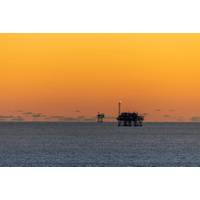
Shell is in advanced discussions to buy LLOG Exploration offshore in a deal valued at more than $3 billion. This would increase the oil major's portfolio of upstream oil and gas producers by acquiring one of the biggest privately owned oil and natural gas producers in the U.S. Gulf. Sources said that the parties were in advanced talks, and that an agreement was close. One source added that the deal could be signed by the end the year.Sources?advised that there is no guarantee that a deal would be reached between Shell and Covington, Louisiana based producer and spoke under?conditions of anonymity for private deliberations.Shell declined to make a comment.
Documents show that Alberta oil regulators stopped enforcing gas flare limits after government pressure.
Documents seen by have revealed that the regulator responsible for environmental enforcement in Canada’s largest oil-producing province, bowed to pressure from both the provincial government and major oil companies in order to remove a limitation on natural gas flare ups as Canadian oil production increased. Alberta's decision to remove its 20-year old flaring limit, after companies exceeded the limit twice in a row with no objections by the federal government is a good example of Canada's challenges in reconciling environmental commitments and a renewed focus of economic growth.
Canadian Natural Resources anticipates higher production and lower expenditure in 2026
Canadian Natural Resources forecast on Friday a modest increase in production by 2026, while reducing total capital expenditures from the levels of this year. This signals a continued focus and disciplined growth. Canada's oil producers have fared better than their global counterparts during the oil slump, thanks to years of investment. They are now among the lowest-cost producers in North America. Canadian Natural, for example, has leveraged assets with a long life and low decline rate and capital strategies that are disciplined to maintain growth and high shareholder returns in weaker market conditions.
EIA: Oil producers must increase drilling to maintain production
The U.S. Energy Information Administration announced on Tuesday that oil and gas producers would need to increase drilling in order to maintain or increase production due to the rapid decline of existing wells. WHY IT MATTER The U.S. has the largest oil production in the world, reaching a record of 13.8 million barrels a day in August. The weak oil price and increasing costs have forced energy companies to reduce billions of dollars in spending and slow drilling, slowing the growth of production. OPEC+ - the largest grouping in the world of oil producing nations and their allies - has also been rolling back its production cuts to clawback market share.
Sources say US Gulf producer LLOG Exploration is interested in selling at a $3 billion valuation.
People familiar with the matter have said that LLOG Exploration Offshore has been exploring the possibility of a sale. This could value one the largest privately owned oil and gas producers on the U.S. Gulf Coast at more than 3 billion dollars, including debt. Sources said that the Covington, Louisiana based company has been working with investment banks at Guggenheim Securities to assess buyer interest. A limited number of parties have been contacted over the past few weeks in order to gauge the level of interest. Gerald Boelte founded LLOG in 1976. His family still controls the company. Gerald Boelte died last year.
EnQuest UK sticks to production forecast despite first-half losses

EnQuest, an oil company based in the North Sea, stuck to its production forecast for the full year on Wednesday. It was encouraged by its operational strengths despite reporting that it had a loss after tax of $1.25 million due to lower production and higher taxes. As with its peers, the company is struggling to deal with Britain's extended tax on windfall profits for oil and gas producers. The tax rate has been raised to 78% - one of the highest rates in the world - which has attracted criticism from many industry players. Amjad Bseisu, CEO of EnQuest, said in a press release that the company is committed to continuing investment in its UK business.
WaterBridge, backed by Five Point, is valued at almost $3 billion and shares soar in NYSE debut

WaterBridge Infrastructure shares rose 25% on their New York Stock Exchange debut on Wednesday. This gives the midstream water management company a market value of almost $3 billion. Shares in the Houston-based firm, backed by the private equity firm Five Point Capital, opened at $20 each, as opposed to the initial offer of $25. WaterBridge raised $634 million through a larger initial public offering. WaterBridge had previously marketed 27,000,000 shares at $17-$20 each. Investors looked beyond tariff uncertainty to make a comeback in the U.S. this fall. New listings have been boosted by record high equity markets, and expectations of rate cuts.
SEC filing reveals that Venture Global is making money on LNG exports from Plaquemines plant
Venture Global has exported more LNG cargoes out of its Plaquemines facility in Louisiana, and it earned twice as much in fees as its other U.S. location. According to the SEC filing, the LNG company exported 51 cargoes of LNG from Plaquemines for a liquefaction charge of $7.09 million British thermal units per quarter (mmBtu). During the same time period, the company exported 38 LNG cargoes at an average of $2.66/mmBtu. Venture Global began selling LNG on Calcasieu Pass under long-term agreements, instead of the spot market. This resulted in lower liquefaction charges for the second quarter.
Alberta has eliminated the gas flaring limit in 2024.

Calculations show that energy producers in Alberta, Canada’s largest oil producing province, exceeded the self-imposed provincial limit for annual gas flaring by 2024, for the second consecutive year. Alberta's energy regulator announced late last week that it would be ending the flaring limit. The regulator, who quietly posted a bulletin to its website, is the first one to report this change. The regulator confirmed Monday that the limit had been removed and stated it was in response to the direction of the provincial government. Canada is the world's number one oil producer. Canada, the world's No.
Senate bill increases value of tax credits to use CO2 captured to produce more oil

The U.S. Senate committee proposed that the tax credit to capture carbon emissions when recovering oil be equal to the tax credit of $85/metric tonne for permanently burying these emissions underground. This would be a boon to oil and gas producers. In its draft bill, the finance committee, which is a key part of the Republican budget package, proposed a change to the 45Q tax credit. This was formerly part of 2022's Inflation Reduction act. The House of Representatives' version of the bill, which passed last month by one vote in that chamber, left the credit for enhanced recovery projects at 60/metric ton.
Texas Pacific Land misses its core profit forecast for the first quarter due to lower oil prices
Texas Pacific Land, a land and royalty company focused on the Permian region, missed Wall Street's expectations for its first-quarter core profits on Wednesday as lower oil prices offset increased production. Brent crude futures dropped on average by a year in the first quarter on fears that President Donald Trump’s trade policy will slow economies worldwide and slash demand for energy, while OPEC+ increases supply. The Trump administration's tariffs have led to macroeconomic insecurity, which has caused oil and gas producers to cut production.