Oil and gas exploration is back. Energy giants are hunting to replenish reserves
Executives at the CERAWeek Conference in Houston, Texas, this week declared that global energy companies have returned to the basics, focusing their efforts on finding?new oil and gas sources. This marks the end of years of underinvestment. The'shale revolution' in the U.S. in recent years promised a flexible, abundant supply. However, growth in renewable energy sources like wind and sun raised doubts over long-term demand for oil. Oil and gas drillers have chosen to 'flood profits into dividends and stock buybacks rather than exploration. Production?in the Permian Basin of the U.S.
Australian energy and uranium in high demand after the Iran crisis - IEA
The head of the International Energy Agency stated on Tuesday that Australia is a vital source of minerals and can help to'stave off' a greater supply shock than the world faces right now due to the Iran War. Fatih Birol is the executive director of the IEA. He said that the world was facing its worst energy shock ever due to the U.S. and Israeli war against Iran. The equivalent of 10,000,000 barrels of crude oil per day are being lost, according to Birol. He said that China controls over 80% of global refining.
Low oil and gas prices affect TotalEnergies' profits, so the company has cut back on buybacks but maintained its growth plans.
TotalEnergies said on Wednesday that it would halve its share buybacks in the first quarter, but was committed to increasing its oil and gas reserve. Low oil and 'gas prices have negated the soaring profit of the fourth-quarter from refining fuels and proceeds from stake sales for renewable assets. The French oil giant's adjusted fourth-quarter net income dropped to $3.8 billion from $4.4 billion one year ago. According to a LSEG consensus, analysts had predicted $3.9 billion. The adjusted net income for the entire year fell 15% to $15.6 Billion…
Equinor, a Norwegian oil and gas company, plans to increase its international production by 2030.

Equinor’s international oil-and-gas portfolio will grow?in the coming years, as the Norwegian energy company targets a?sharply?increased?output abroad in 2030. Equinor produces oil and natural gas in seven other countries than Norway after recent divestment in Argentina. This is down from 12 in 2019. Equinor's goal is to increase overseas oil production from 730,000 barrels per day in 2025 to more than 900,000. This would be a 23% increase. Philippe Mathieu stated that despite the divestment, we are still seeing growth of 900,000. The company's Bacalhau,?Raia and Sparta projects, which are operated by Shell, in the U.S.
Namibia Flags Approval Need for TotalEnergies, Petrobras Offshore Stakes
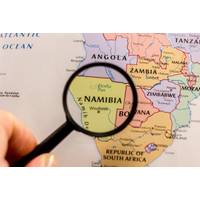
Government officials stated on Sunday that Namibia would not recognize the purchase of offshore stakes by TotalEnergies or Petrobras announced last week until the oil companies followed the proper approval route.A spokesperson for the Presidency, Jonas Mbambo confirmed that "no transaction" can be recognized or considered valid until a formal application is submitted, and the prescribed legal process has been completed.French oil giant TotalEnergies, and Brazil's Petrobras announced on Friday that they each had acquired a 42.5% share in the PEL104 offshore Namibia exploration licence.
Namibia's Energy Ministry blasts TotalEnergies and Petrobras for failing to follow procedure
Namibia expressed concern that TotalEnergies and Petrobras acquired new offshore positions within the Luderitz basin without notifying the energy ministry and/or obtaining the necessary approval. Both French and Brazilian oil companies, TotalEnergies & Petrobras, announced on Friday that they each acquired a 42.5% share in an offshore Namibia exploration license. The firms are looking to develop oil at one of the last frontiers in exploration. Maravilla Oil and Gas and Eight Offshore Investments Holdings acquired the stakes of the PEL104 license. Both majors have been 'partners' in Brazil oil assets for over a decade.
TotalEnergies and Petrobras purchase land north of Namibia's massive Mopane discovery
Both TotalEnergies, the French oil giant, and Petrobras, the Brazilian firm acquired a 42.5% share in an offshore exploration license. The firms are looking to "develop" oil in one of last frontiers in exploration. Total has expanded its holdings in South Africa, where the company hopes to become the first oil producer by the end decade. Petrobras has also made a significant step in its plan to make Africa its primary exploratory region outside Brazil. Oil companies looking to replenish their reserves are flocking to Namibia.
Oil majors buy up West African oil blocks to prepare for the next Brazil
Chevron, TotalEnergies and other oil majors are snatching up offshore blocks off the coast of West and Southern Africa. Geology, regulatory reforms and the need to replenish the reserves have prompted the search for the next Brazil. Companies are restocking oil and gas assets as fossil fuel demand is expected to remain higher than forecasted just a few short years ago. Justin Cochrane is the African Upstream Regional Research Director for S&P Global Commodity Insights. He said that of all of the oil and natural gas discovered in West Africa since 2020, 11% or about 8.7 billion barrels equivalent to oil (boe) has been found.
Galp is focusing on upstream growth in Brazil and Namibia with its refining spin-off.

The co-chief executive of Galp, Joao diogo marques da Silva, said on Tuesday that the company will "focus" on growing its upstream oilfields business in Brazil and Namibia. It may also list some of its newly created downstream business within a few years. The company announced earlier this month that it was in discussions with Moeve, a private equity-backed firm, to combine their two businesses into two new?entities. One entity would focus on retailing and the other on refining. The merger will exclude Galp's upstream production of oil and gas…
TotalEnergies consolidates its position in Namibia with the Galp asset exchange
TotalEnergies cemented its position in Namibia by agreeing on an asset exchange with Portugal's Galp, which makes the French company the operator for the Mopane exploration. Galp will receive a 10% stake in Total's PEL56 license, which holds the Venus discovery. It will also get a 9.4% share in the PEL91 license. The three licenses are all next to one another. Total will cover half of Galp’s exploration and appraisal costs on Mopane. However, Galp must pay back this amount from future cash flows from the field. QatarEnergy holds the second largest stake in PEL56 and 91.
Document shows that Shell has been approved as the majority partner of PetroSA in the block offshore South Africa.
A document obtained by revealed that South Africa's national oil company PetroSA has approved the deal for Shell Offshore to receive a 60% share in Block 2C off its west coast. The agreement, if it is successfully concluded, will increase Shell's exposure in the Orange Basin. This area has been dubbed one of the most sought-after exploration zones around the globe after the major oil discoveries made in Namibia. In a short note, PetroSA's priority programs stated that the company approved the farm-in agreement…
Sources say that Total and Chevron are leading the race to purchase Galp's Namibian oil discovery.

LISBON/PARIS/CAPE TOWN - Four sources have confirmed that TotalEnergies, Chevron and other oil majors are the frontrunners for a 40% stake in Galp Mopane's Namibian discovery. After a series of high-profile oil discoveries, oil companies are flocking to Namibia. The country has no hydrocarbons and could be a top-15 producer in the next decade. Mopane's estimated resources are at least 10 billion bbls. Galp hopes to announce the winner by year end. TotalEnergies & Chevron have declined to comment. The negotiations regarding Namibia are moving forward with a list of preferred bidders that is strongly aligned to Mopane…
Sources say that TotalEnergies and Chevron are leading the race to purchase stakes in Mopane, owned by Galp, in Namibia.
LISBON/PARIS - Four sources have confirmed that TotalEnergies, Chevron and other oil majors are the frontrunners for a 40% stake in Galp Mopane in Namibia. Galp said that it would announce the winner of Mopane's estimated resources by year-end. Namibia has attracted international oil companies, despite the fact that it does not produce hydrocarbons, following a series of high-profile finds beginning in 2022, indicating the country's potential to be among the top 15 oil producers by 2035. This is according to NAMCOR, the state-owned oil company in Namibia. TotalEnergies & Chevron have declined to comment commercially.
BW Energy reports encouraging preliminary results for Kharas well offshore Namibia
BW Energy announced on Friday that the preliminary results of its Kharas-1 well, which was drilled offshore Namibia in the Kudu license, were encouraging and indicated the presence hydrocarbons. The results come after a series of discoveries made by oil companies including TotalEnergies and Shell, which have transformed the small Southern African nation into a hotspot for exploration. BW Energy said that the appraisal well had provided geological data for a wider petroleum system. BW Energy is developing the Kudu gasfield, which was discovered a few decades ago. It contains approximately 1.3 trillion cubic foot of proven gas.
South Africa plans to revive its small-nuclear reactor technology

The electricity and energy Minister said that South Africa expects its Pebble Bed Modular Reactor to be removed from the status of care and maintenance by the first quarter next year, or even sooner. South Africa, once considered a leader in the field of small modular reactors (PBMR), halted research on PBMR in 2010, after spending over 10 billion rand (577 million dollars) and without building a planned demo model. Kgosientsho RAMOKGOPA, the minister of electricity and energy told a press briefing that "we are far advanced (in) our internal processes" to make the case for lifting the care and maintenance to the PBMR.
Portugal's Galp is in advanced discussions to select partner for Mopane by this year

Galp, a Portuguese oil company, is in advanced discussions with several major oil companies to sell a 40 percent stake in the offshore Mopane field located in Namibia. The company expects to select a partner before the end of this year. Galp wants to sell half its 80% stake in the Mopane field to a company who would operate it. Bastos stated that "the interest is enormous", adding that Galp was looking for "a partner who accelerates the Mopane development as quickly as possible...to get the first oil". It's important to know who the best partner is.
Chevron hires TotalEnergies to shake up its exploration team
Chevron named a new global exploration head on Tuesday as CEO Mike Wirth strives to improve the track record of the company in discovering new oil and gas sources. Kevin McLachlan, vice president of exploration, will succeed Liz Schwarze in November, after she retires from Chevron in February, following 36 years. McLachlan's experience includes senior vice presidents of exploration for several oil companies, including TotalEnergies. He has also held positions at Murphy Oil and Nexen. Wirth is disappointed with the recent exploration results. Chevron has oil and gas reserves.
RWE withdraws $10 billion Namibia Green Hydrogen Project
RWE, the German energy utility, announced on Monday it was withdrawing from Namibia's $10 Billion Hyphen green ammonia Project. This is a blow for Namibia's ambitions of becoming a hydrogen hub. The pullback represents the latest example where companies are reconsidering their investments in a new technology that costs a lot to develop. RWE signed an initial non-binding Memorandum of Understanding with Hyphen in 2020 to take approximately 300,000 tonnes of ammonia per year - a compound that is mainly used to make fertilizer - starting 2027.
South African court cancels TotalEnergies' oil exploration permit
The court's decision, which was seen by, showed that a South African court had revoked the environmental authorization granted to TotalEnergies for its joint venture with Shell to explore oil in a block near the Cape Coast. The court did say that TotalEnergies was given the chance to correct the deficiencies found, such as a failure properly to assess the socio-economic impact of any oil spills or to take climate change into account. In her ruling of August 13, Western Cape High court Judge Nobahle Lockwood stated that "Total should be given the opportunity to submit revised or new assessments...
Galp Energia expects to find a partner in Namibia

Galp Energia, a Portuguese company, raised its target profit for the year following a stronger-than-expected second quarter performance. It also said that it expected to find a new partner to help develop a promising offshore oil discovery. In mid-day trading on Monday, shares were up by 2.5%. Galp has raised its forecast for the adjusted earnings before taxes, depreciation, and amortization this year from 2.5 billion euros to over 2.7 billion dollars. The increased forecast is due to the contributions of its gas-trading business…