Ifax reports that Kashagan Oilfield Operator ordered to pay $4.9 Billion environmental fine
Interfax reported that Kazakhstan's Justice Ministry said that the operator of the?Kashagan oilfield is required to pay an environmental fine of 2.3 trillion tenge ($4.89 billion) by July 20. However, the company has filed a claim for arbitration against the penalty. Interfax reported that Daniyel Vaisov, deputy minister of justice in Kazakhstan, said the arbitration was being held in Washington D.C. The North?Caspian Operating Company, which is Kashagan’s operator, is a joint-venture between Shell, TotalEnergies,?ExxonMobil, and China’s CNPC.
Sinopec signss engineering contract for Central Asia's largest integrated biojet-fuel complex
Sinopec's subsidiary in Central Asia has signed a contract to design the region's first fully integrated, large-scale sustainable aviation fuel complex. This is a significant step for the group as it pushes low-carbon energy overseas. Sinopec Engineering announced in a'statement' on Wednesday that it had signed a contract for front-end engineering & design (FEED) with Uzbekistan’s Allied Biofuels FE LLC. The complex will have a production capacity of?approximately?160,000 metric tons per year of biomass-based SAF.
A strong El Nino may be imminent. Climate change will exacerbate its effects
WMO announced on Tuesday that the El Nino weather pattern was forming and will cause extreme weather all over the world in this year. Scientists believe climate change's impact will be particularly severe. World Meteorological Organization says there's 80% chance that an El Nino will develop between June and August. And 90% chance of it lasting until November. The statement is the most clear indication yet. El Nino occurs naturally every two to seven year, when weakening winds in the east Pacific result in warmer water.
The European Commission promises tougher actions on trade with China
The EU's relationship with China in terms of trade and investment is "not sustainable", according to the European Commission, which pledged a stronger response. Commissioners were discussing how best to protect Europe's industries against surging Chinese imports. The EU's leaders will meet on June 18-19 to discuss ideas. Possible proposals include forcing EU companies to diversify their supply chains, or introducing new trading mechanisms to limit China's access the EU's market for chemicals, metals, and clean energy technologies.
The European Commission discusses a policy shift to protect industries from China
European Commissioners met on Friday to discuss ways to shield Europe's industry from surging Chinese imports and to secure alternative supplies of critical inputs and minerals to reduce its heavy dependency on China. The European Union executive wants to present ideas before the EU leaders' summit, which will take place on June 18-19. Possible measures include forcing EU companies into diversifying supply chains or creating new trade tools in order to limit China's access to chemicals, metals, and clean technology.
Russell: China's LNG imports are falling, which is helping Asia to adjust to the Iran war losses.
In April, Asia's LNG imports are expected to fall to their lowest level in six years as the Strait of Hormuz effectively closes. This will cut off cargoes coming from Qatar, a major LNG supplier. It could be argued, despite?the volume loss, that Asia's markets for LNG are more successful at adjusting to fallout from U.S. and Israeli attacks on Iran. The world's largest buyer of super-chilled gasoline, China, is doing its part to reduce imports. However, smaller, less wealthy buyers, such as Pakistan, are also being forced to lose cargoes.
Russell: China's LNG imports are falling, which is helping Asia to adjust to the Iran war losses.
In April, Asia's LNG imports are expected to fall to their lowest level in nearly six years as the Strait of Hormuz effectively closes off Qatari cargoes. It could be argued, despite the volume loss, that Asia's markets for LNG are better able to adjust to the fallout from the U.S.-Israeli attacks on Iran than those of crude oil and refined goods. The world's largest buyer of super-chilled gasoline, China, is doing its part to reduce imports. Smaller and less wealthy buyers, such as Pakistan, are also being forced to lose cargoes.
Takaichi, the PM of Japan, says that Japan will release an extra 20 days of oil reserves in May.
Sanae Takaichi, the Prime Minister of Japan, announced at a cabinet meeting held on Friday that Japan will release 20 days worth of oil reserves in May to ensure stable supply domestically while also searching for barrels from outside the Middle East as the conflict in this region disrupts global supplies. Japan depends on the Middle East for 95% of its crude oil. On March 16, it began unilaterally and in coordination with other countries to release reserves to provide enough oil for 50 days. The 20-day supply is an additional amount.
World Bank's guarantee arm switches to portfolio approach after hitting $100 billion milestone
The Multilateral Investment Guarantee Agency of the World Bank Group (MIGA) reached a milestone on Thursday, surpassing $100 billion in total guarantees issued since its founding almost 40 years ago. MIGA's latest deal, in which it bundles up to 23 guarantees for projects in Africa and the Middle East, as well as Central Asia, is a "strategic shift" away from its traditional "project-by-project" guarantees, to a more "portfolio-based approach". MIGA will guarantee AMEA Power, a Dubai-based company, a total of?almost $1,5 billion. The plan will be implemented in two phases.
Russell: China imports most energy but has the best position on Iran
China is the largest energy importer in the world and would appear to be vulnerable to the rise in crude oil and gas prices caused by the conflict between Israel, the United States and Iran. China's huge crude oil stockpile is a buffer against price spikes. This means that any energy-driven inflation in other parts of the world won't hit China. By increasing the exports of refined goods, China's refiners may also be able to reap a windfall profit in 'the?event?of a prolonged disruption of crude oil supplies from the Middle East.
Russell: China imports most energy but has the best position on Iran

China, the world's biggest energy importer, is vulnerable to the rise in prices of crude oil and natural gas caused by the conflict between Israel and United States against Iran. China's huge crude oil stockpile is likely to be a buffer against any price spikes in the world, so that any energy-driven inflation will not affect China. In the event that crude oil supplies from the Middle East are disrupted for a long time, it is possible that China’s refiners could make a windfall profit by increasing exports of refined goods.
Mercuria profits fall as the company expands into metals and LNG
Mercuria's?chief finance officer? told a reporter on Friday that the trading house had posted a 6% drop in profit for 2025, despite expanding its metals and physical LNG businesses, as well as its shipping business, from Latin America into Central Asia. Trading?houses' profits fell from the record highs in 2022-2023 when energy prices rose due to Russia’s invasion of Ukraine. Merchants reinvested profits in business expansion, equity and dividends while paying record amounts.
Lukoil to Sell International Assets
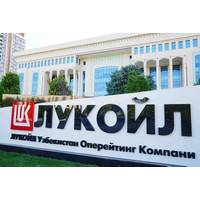
Russia's Lukoil is selling its international assets after the U.S. imposed sanctions on the company.Washington refused to approve the sale of assets to Swiss commodity trader Gunvor, throwing Lukoil's operations in disarray and leading to a scramble of potential buyers.The U.S. Treasury cleared potential buyers to talk to Lukoil until December 13. They will need separate approval for specific deals. U.S. oil major Chevron is studying options to buy some global assets of Lukoil, sources have said. U.S.
US sanctions threaten to disrupt Lukoil's international assets
The sale of Lukoil's overseas assets to Swiss commodity traders Gunvor has been blocked by Washington, which is a result of U.S. sanctions. Lukoil has a global footprint that includes upstream oil and natural gas projects, refineries, and fuel distribution networks in Europe, Central Asia and the Middle East. The company produces a half-million barrels of crude oil per day, 0.5% of the global oil production, outside of Russia in countries like Iraq, Kazakhstan, and Azerbaijan. Here are some details on its international assets.
Lukoil, a Russian oil company, says it will sell its international assets in response to Western sanctions
Lukoil - Russia's second largest oil producer - announced on Monday that it will sell its international assets in response to sanctions imposed by the United States last week over Ukraine. The sale of assets will be the biggest action taken by a Russian firm in response to Western sanctions over Russia’s war in Ukraine that began in February 2022. The sale of assets is being conducted under an OFAC wind-down license. Lukoil stated that if necessary, the company will apply for an extension of the license in order to continue uninterrupted operations of international assets.
EBRD may lend up to $1,5 billion for Central Asia Hydro Plant

The European Bank for Reconstruction and Development (EBRD) could lend up $1.5 billion for an Central Asian hydropower station, according to its president. He also noted that the demand for renewable energy is increasing despite some resistance to funding green energies. Kambar-Ata 1 is one of Central Asia's largest renewable energy projects, with a combined 1,860 megawatts. Megawatts of power is expected to boost agricultural output in Kyrgyzstan and Kazakhstan, and provide electricity.
EU Chief: EU to counter new US tariffs
The European Commission's Ursula von der Leyen said that Donald Trump's tariffs on all goods and services were a serious blow to the global economy. She also stated that the European Union would be prepared to take countermeasures in the event of a failure to reach an agreement with Washington. Von der Leyen stated that the EU had already finalised a first set of tariffs for mid-April on goods worth up to 28.4 billion dollars ($26 billion) from the United States in response to U.S. tariffs on steel and aluminum which took effect March 12.
Kazakhstan wants better terms for oil production sharing agreements
Kazakh President Kassym Jomart Tokayev ordered the government on Tuesday to intensify talks with international oil giants about an extension existing Production Sharing Agreements (PSA) at "better conditions". Central Asia is one of the top 10 oil producing countries in the world. It has a chequered past when it comes to international oil companies. They have been sued for billions of dollars. The government, according to foreign companies, is only seeking to increase the share of its oil and gas projects. This "resource nationalism" they call it.
TWMA Appoints Aslaksen as New CEO

Specialist drilling waste management company, TWMA, has announced the appointment of Halle Aslaksen as its new CEO.Aslaksen joins the Aberdeen-headquartered company from the Norwegian hydropower operator Småkraft, where he served as CEO. He was previously CEO at TCO and president of ALTUS Intervention in Scandinavia.With more than 20 years’ experience in the oil and gas industry, Aslaksen has built a career across several disciplines and has worked across various roles for Smith International…
GasLog Sees Tighter LNG Shipping Market
GasLog, an international owner, operator and manager of liquefied natural gas (LNG) carriers, is predicting a tighter LNG shipping market, as increasing United States LNG output combines with a seasonal uptick in demand for gas, resulting in rising demand for shipping and higher utilization of the global fleet.These underlying trends in the LNG commodity and shipping markets point towards a structurally tighter market through 2020 and into 2021.As of October 28…