China taps deep shale deposits in Sichuan to boost its gas production
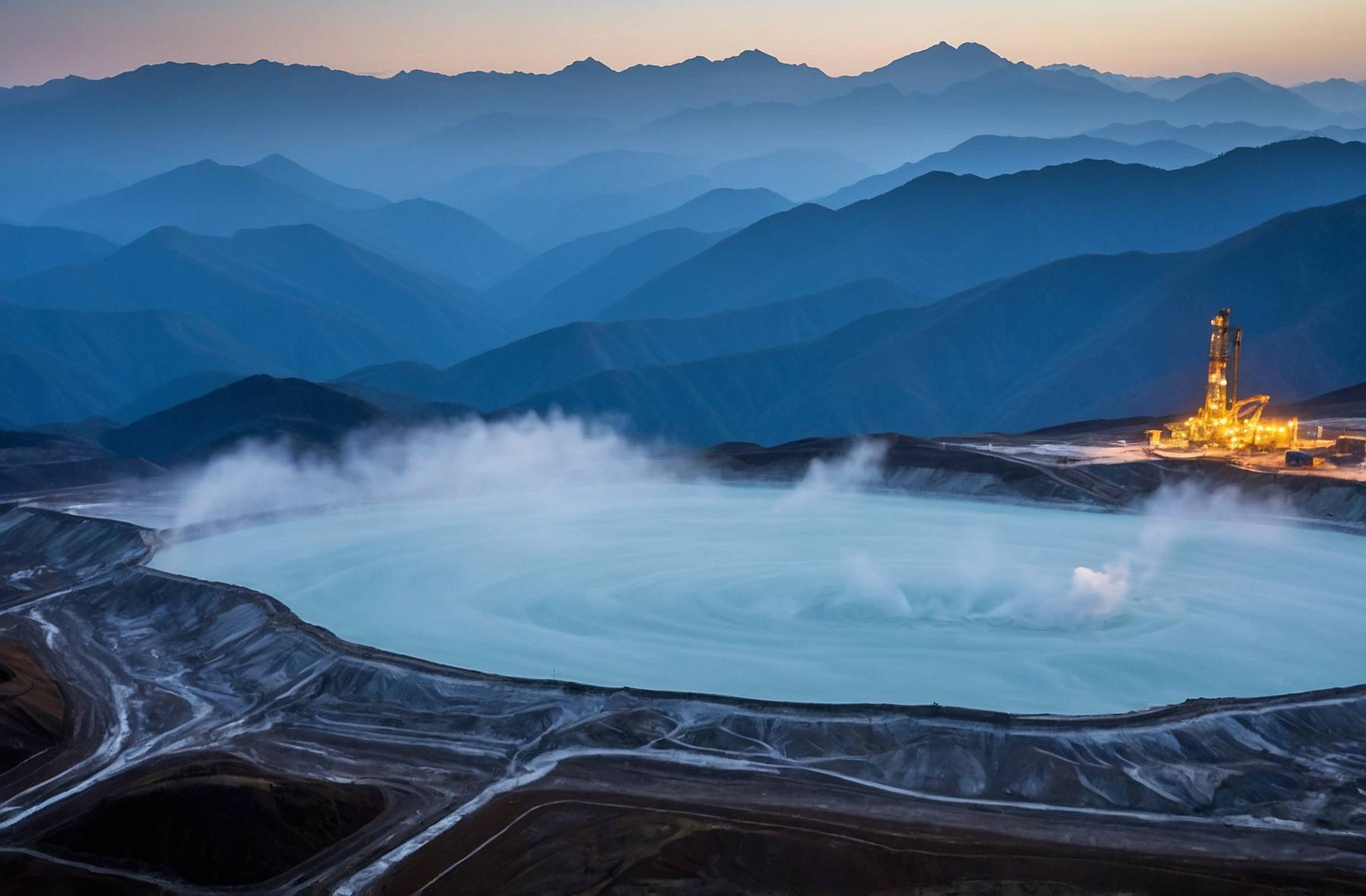
Sinopec experts and industry consultants say that China is increasing gas drilling in deeper, more ancient shale deposits of the Sichuan Basin, which could increase domestic production by over a third before 2035.
State oil giants, whose shale-gas output is below government targets, and only 10% of China's gas production, are working to stop the slowdown by drilling 5,000 meters (16,400 feet) deep.
Sinopec, the state oil giant, announced last month that it had discovered 236 billion cubic meters (bcm), or proven gas reserves in the Ziyang Dongfeng Project located 4,500 metres below the surface. This is a major breakthrough for ultra-deep shale.
PetroChina, a state-owned company, made a discovery of similar size in 2023 at a well adjacent to Ziyang.
Both companies are tapping into the Qiongzhusi formation, which is located in the Ziyang area, between the megacities Chengdu and Chongqing in the eastern part Sichuan basin.
After drilling over 100 wells, the companies are now accelerating development which will cost billions. According to officials from the state oil companies, commercial development should be completed in two to three year.
According to Rystad Energy, the only other shale play with a similar depth outside of?China is Western Haynesville, Texas, at 5,200 m. The challenges include higher costs and longer drilling times.
FALLING BACK BEHIND GOALS
China started commercial shale-gas production in 2014. In 2016, it set targets of 30 billion cubic meters by 2020, and 80 to100 billion cubic metres by 2030.
Analysts said that China's initial shale-gas output soared to 20 bcm in 2020, from formations mostly buried shallower than 3,500m. However, growth has declined sharply over the past few years, to around 4% per year due to rapid depletion.
The United States was the top producer in 2025 with 27 bcm, but China's output is only 5% that due to the more complex geology of the region and the concentration of resources within the densely-populated and mountainous Sichuan Basin.
Shell, BP and other global giants have had disappointing results so far in China. Independents were left to develop the country by state-owned companies.
Analysts said that Beijing views shale gas along with deep coal basin gas as a means to reduce costly liquefied gas imports, and also drive better terms on gas pipeline supplies coming from Russia and Turkmenistan.
Chen Lin, an upstream researcher with Rystad Energy said that deeper development could boost China's shale-gas output by almost half, from levels in 2025 to 40 bcm or 13%, of the country’s forecasted gas production.
THICKER, PREMIUM-QUALITY FORMATIONS
Zhao Qun is a PetroChina Exploration and Development Institute geologist. He said that early assessments indicate the Qiongzhusi Formation, which covers 10,000 square kilometers (3,861 sq mi), contains 10 trillion cubic meters of gas. The formation could pump between 30 and 50 billion cubic metres (bcm) of gas per year, depending on the timing.
Zhao said the Qiongzhusi discoveries mark a breakthrough in multi-layered formations, requiring more complex drilling than previous shallower projects.
Sinopec’s chief scientist Guo Tonglou said Qiongzhusi - the oldest shale in the world at 540 millions of years - could produce 10 to 15 billion cubic meters per year by 2035.
Qiongzhusi is "deeper, wider, and premium-quality" than China's first commercial play, Fuling. However, greater depth increases costs per well and complicates drilling and engineering challenges.
Zhao and Guo stated that Sinopec is developing new drilling techniques, in particular to prevent leakage of gas between horizontal multi-layer wells.
Wood Mackenzie analysts stated that Qiongzhusi would contribute 10 bcm to the overall production by 2035. Total shale-gas production could double to 62 billion cubic meters, or 18%, because of "huge potential" found in older, shallower formations.
RISKIER COSTS
Wood?Mackenzie calculates breakeven costs of $5 to $5.50 for ultra-deep assets, compared with $4 for shallower shales. Wood Mackenzie and 'Rystad energy estimate breakeven costs for the ultra-deep assets at $5 to $5.50 per million British thermal units (mmBtu), compared to $4 in Argentina's Vaca Muerta and $2.70 in U.S. shale.
Compare Asian spot LNG Prices
Sinopec's Guo said that a Qiongzhusi play costs 90 to 100 million yuan (about $13.31 million and $14.79million), which is 45% more expensive than a shallower one. However, he added, a higher per-well production rate as well as higher recovery rates could make ultra-deep shales commercially viable.
Guo stated that China pursues deep shale because of its limited resource base.
"But if you can do it, with cost-management and technological improvements, this will have global implications in terms of freeing up resources." ($1 = 6.7617 Chinese yuan renminbi)
(source: Reuters)


