China and India make strategic investments in clean energy, which is not popular in the West
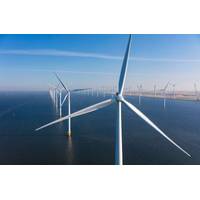
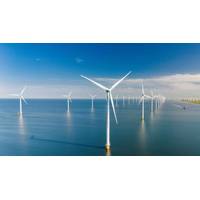
In the wind-swept grasslands in Inner Mongolia (northern China), towering white turbines are lining hilltops as sentinels, guarding a hydrogen industry Beijing wants to take away from coal.
The project is part of the largest of its kind, a $2 billion venture that uses renewable energy to power banks of electrolysers which produce the?molecules required for fertilizer production, marine fuel, and low-emissions steelmaking.
India's commitments to "green hydrogen" are more aggressive and concrete than China's. New Delhi, backed by $2.1 billion in subsidies, is targeting 5,000,000 metric tons of "green hydrogen" annually by 2030. This is five times larger than the current global market size and double what analysts expect Chinese output to be at that time.
The two largest nations in the world are placing massive bets at the same moment that the West is quietly backing away from its ambitious goals for green hydrogen since the beginning of this decade, after costs proved more difficult than expected.
China and India share a common trait - despite their very different motivations - the political will and power to "force" a market by underwriting projects and steering demand, and reducing costs through scale.
India has attracted private capital through a combination of subsidies and offtake guarantees by refineries, fertilizer plants, and steelmakers. This makes projects bankable right from the start.
Energy security is the motivation. India's hydrogen is mostly derived from natural gas imported from other countries. The supply of this gas has been affected by the Middle East, Ukraine, and pandemic.
China, which can deploy large state-owned companies or attract private firms with large-scale industrial projects that are planned and led by them, wants to maintain its dominance as the industry moves towards cleaner energy.
Beijing's five-year plan, announced in March, listed green hydrogen along with quantum computing, brain computer interfaces, and AI-enabled robots as a frontier industry - a status boost that signals increased capital flow.
CHINA: SPEED & SCALE
Minh Khoi Le, Rystad Energy's director of hydrogen, stated that China invested $3.7 Billion in green hydrogen production during the past year. This is more than twice what was spent by the United States.
Rystad estimates that by 2031 China will have 2.6 million tonnes per year of coal online. This represents $26 billion worth of investment.
The Chifeng project was run by Chinese wind-turbine maker Envision Energy. The company aims to export green hydrogen and ammonia in Asia, Europe and Latin America. It delivered its first green cargoes of ammonia in February to South Korea's Lotte Fine Chemical.
Jose Bermudez, the hydrogen leader at the International Energy Agency, said that China had not been very visible in this green hydrogen situation a year ago. Two years later, they now have nearly all of the largest projects around the world.
Kevin Tu, managing director of Agora China, said that China doubled its renewable-based hydrogen production to 250,000 tons last year. This is more than half the global total and exceeds a 2022 goal to produce 100,000-200,000 tons per year by 2025.
Tu stated that in Inner Mongolia, and other places where there are strong winds and bright sunlight, the cost of green hydrogen can be as low as $2 per kilogram, which is close to parity with coal-based hydrogen. Tu said that the average cost of producing green hydrogen is $4 per kilogram in China.
INDIA: Aggregating Domestic Demand
India's National Green Hydrogen Mission, under the Clean Energy Ministry, has lowered the cost of producing green hydrogen to 279 rupees per kilogram (around $3), from $5 in 2023.
Abhay Bakre is the head of the mission and he told us that costs should be near $2 by the year 2032, as technology advances, processes are more efficient, and more components are manufactured domestically.
He said that projects will start delivering "large amounts" of green hydrogen by next year and "scale up quickly" to reach the "target" of 5,000,000 tons by 2030.
The initiative will see industrial giants such as Larsen & Toubro (India), Bharat Petroleum Corporation, GAIL, and JSW Steel (India) produce around 8,000 tonnes of green hydrogen each year.
New Delhi kicks off demand by running reverse auctions. Sellers compete to undercut one another in order to win long-term deals, revealing what the lowest price producers are willing and able pay.
Last month, the government announced that fertiliser suppliers and companies had signed offtake agreements for 724,000 tonnes of green ammonia. This could cover a third of the country’s hydrogen needs.
In a recent report, analysts from the Institute of Energy Economics and Financial Analysis stated that "bold sector-specific initiatives at home, combined with strategic international partnerships, will be required to maintain momentum".
India has one of the lowest renewable energy generation costs in the world. It is therefore well positioned to capture a large portion of the global export market. Reporting by Sethuraman N.R. in New Delhi, and Colleen H.W. in Beijing. Editing by Kevin Buckland.
(source: Reuters)